
CGPA to GPA Calculator
Convert Indian CGPA (10-point) to GPA (4-point)
Conversion Results
Other Conversion Methods
The global education system has become increasingly interconnected, and as students pursue opportunities across borders, the need for a CGPA to GPA calculator has become more pressing than ever. Universities, employers, and scholarship committees often ask for standardized academic records. However, grading systems vary widely across countries and institutions, leading to confusion and inconsistency. This is where a conversion mechanism, particularly from Cumulative Grade Point Average (CGPA) to Grade Point Average (GPA), plays a crucial role.
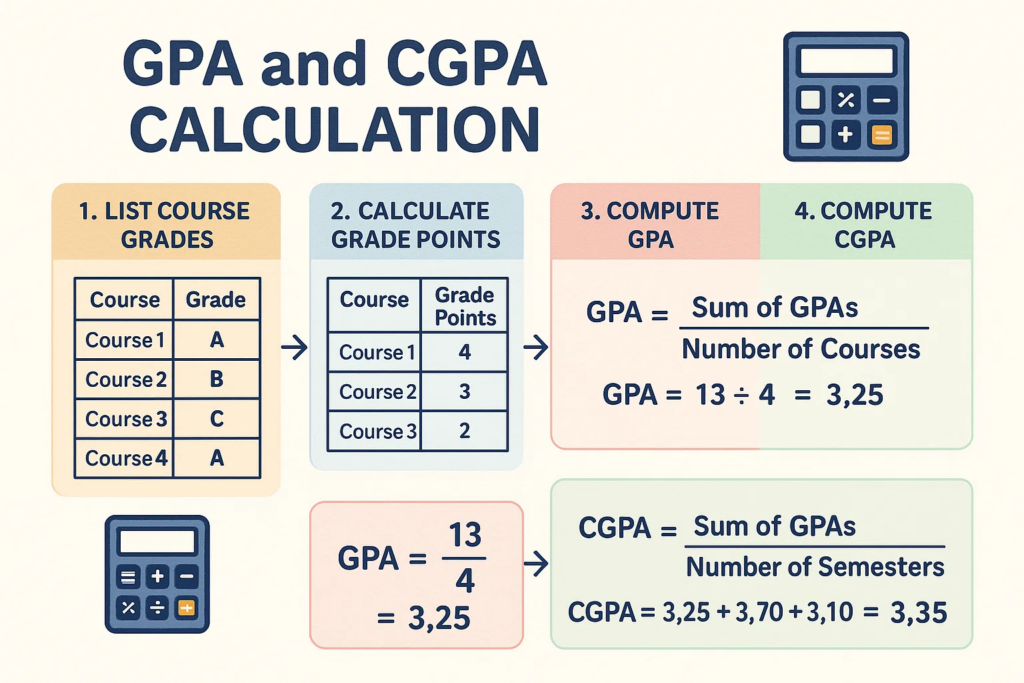
This article provides an in-depth look into the CGPA to GPA calculator, exploring its history, methodology, regional and state-wise implications, educational policy frameworks, and the role it plays in empowering students worldwide. With extensive detail, real-world applications, and future prospects, the discussion sheds light on why such a calculator is not just a mathematical tool but also a catalyst for academic mobility, social development, and equitable opportunities.
Understanding CGPA and GPA: The Basics
Before diving into conversion methods, it is essential to understand what CGPA and GPA represent.
- CGPA (Cumulative Grade Point Average): This is a system used predominantly in South Asian countries like India, Nepal, and Bangladesh, and also in some African and Middle Eastern nations. CGPA reflects the average performance of a student across all subjects in a program. It usually works on a scale of 10. For example, a CGPA of 8.5 indicates a consistently high level of academic performance.
- GPA (Grade Point Average): GPA, on the other hand, is widely used in the United States, Canada, and some European nations. It generally operates on a scale of 4.0. A GPA of 3.7 or above is considered excellent, while a GPA of 2.0 represents the minimum passing benchmark.
The challenge arises when students with CGPA scores apply to universities that demand GPA scores. Directly comparing these systems without a standard conversion formula can be misleading. This is where the CGPA to GPA calculator steps in, ensuring accuracy and fairness.
The History of CGPA to GPA Conversion
The evolution of CGPA to GPA conversion is closely tied to the globalization of higher education. Until the early 2000s, universities handled applications with region-specific grading manually, often relying on guesswork or internal equivalency charts. However, this approach lacked transparency and created confusion for international students.
With the advent of digitalization, online CGPA to GPA calculators emerged to automate the process. Initially, they were simple ratio-based tools, but as educational systems became more diverse, these calculators began integrating policy-driven frameworks, state-wise grading standards, and institutional equivalencies. Today, advanced calculators use not only mathematical formulas but also contextual considerations, including credit hours, course weights, and grade distributions.
Objectives of a CGPA to GPA Calculator
The purpose of a CGPA to GPA calculator extends beyond mere arithmetic. Its objectives include:
- Standardization: Creating a common ground for comparing students’ academic performance across regions.
- Fair Evaluation: Ensuring students from different educational backgrounds are judged equitably.
- Ease of Access: Offering quick conversions for application deadlines and job recruitments.
- Policy Implementation: Assisting governments and institutions in aligning academic performance with scholarship and welfare initiatives.
- Student Empowerment: Providing transparency that helps students plan better for higher education abroad.
How Does a CGPA to GPA Calculator Work?
While conversion methods can vary depending on policies of individual institutions, the most commonly accepted approach uses a proportional formula.
For example:
- GPA = (CGPA ÷ Maximum CGPA) × Maximum GPA scale
If a student has a CGPA of 8.2 out of 10, and the GPA scale is 4.0, the calculation becomes:
- GPA = (8.2 ÷ 10) × 4 = 3.28
However, calculators also integrate region-specific rules. Some countries, such as India, use percentage equivalents (where CGPA × 9.5 = percentage), while U.S. universities often prefer a qualitative mapping where specific CGPA bands correspond to GPA values.
Regional Impact of CGPA to GPA Conversion
The adoption of CGPA to GPA conversion mechanisms has wide-reaching regional impacts:
- Asia: In countries like India and Bangladesh, where CGPA dominates, students aiming for global opportunities rely heavily on calculators to gain entry into Western universities.
- North America: For universities in the U.S. and Canada, the availability of reliable conversion methods simplifies admission evaluations.
- Europe: European institutions, particularly under the Bologna Process, encourage standardized grading, making conversion tools essential for non-European applicants.
- Africa and Middle East: Students from developing nations depend on calculators to secure scholarships, linking academic potential with social mobility.
Policy Framework Surrounding Academic Conversions
Educational policy plays a vital role in ensuring the credibility of conversions. Many countries have issued guidelines on equivalency, while international bodies like UNESCO encourage harmonization of grading systems.
- India’s UGC (University Grants Commission): Provides formulas for converting CGPA into percentages, which are later adaptable for GPA.
- United States Accreditation Boards: Recognize equivalency reports provided by credential evaluation agencies, many of which rely on CGPA to GPA calculators.
- European Union Policies: Under Erasmus and Bologna agreements, standardized conversions ensure student mobility across EU states.
Such frameworks enhance transparency and prevent manipulation of scores, thereby ensuring fair competition.
State-Wise Benefits and Implementation in India
In India, where the majority of students graduate with a CGPA-based mark sheet, state-wise boards and universities have adopted different grading methodologies. This variation makes conversion tools crucial.
For instance:
- Maharashtra & Gujarat: Universities often provide both CGPA and percentage, which simplifies GPA conversion.
- Tamil Nadu & Karnataka: Students rely heavily on conversion calculators since only CGPA is provided in final transcripts.
- Delhi & Uttar Pradesh: Government policies encourage inclusion of percentage equivalents, easing international applications.
By streamlining conversions, students from rural and urban areas alike can compete globally, bridging educational gaps across states.
CGPA to GPA Conversion and Women Empowerment
Access to global education is a key driver of women empowerment schemes. For many women, particularly in developing countries, higher education abroad opens doors to leadership roles, research opportunities, and financial independence.
The availability of a reliable CGPA to GPA calculator ensures that female students are not disadvantaged by technical discrepancies in grading. This levels the playing field and supports government and NGO-driven initiatives for gender equality in education. Scholarships specifically targeting women often demand GPA submissions, making conversion tools indispensable.
Role in Rural Development and Social Welfare Initiatives
Rural students often face systemic disadvantages, including limited exposure to international grading systems. By simplifying academic equivalency, a CGPA to GPA calculator helps rural youth access global scholarships and exchange programs.
For example, rural development programs in states like Bihar and Odisha encourage bright students to apply for foreign fellowships. These opportunities are feasible only when students can submit GPA-converted scores. Thus, the calculator indirectly supports social welfare initiatives by creating a pathway from rural classrooms to international universities.
Success Stories of Students Using CGPA to GPA Conversion
Across the globe, success stories highlight the importance of reliable conversion.
- A student from Kerala, with a CGPA of 9.1, successfully converted it to a GPA of 3.64 and gained admission to a Canadian university under a women empowerment scholarship.
- An engineering graduate from Hyderabad used a conversion calculator to apply for Erasmus scholarships in Europe, ultimately securing a research fellowship.
- Rural students from Punjab, through government social welfare schemes, leveraged accurate GPA equivalents to win placements in U.S. institutions.
These stories underscore how a CGPA to GPA calculator transforms aspirations into reality.
Challenges in CGPA to GPA Conversion
Despite its benefits, the process is not without challenges:
- Lack of Standardization: Different universities use different formulas, leading to inconsistencies.
- Over-Reliance on Tools: Students sometimes use calculators without verifying official requirements, risking misinterpretation.
- Institutional Bias: Some universities prefer applicants with native GPA transcripts, undervaluing CGPA scores.
- Awareness Gap: Rural and first-generation learners may not be aware of such tools, missing opportunities.
Addressing these challenges requires stronger policy frameworks, increased awareness campaigns, and integration of calculators into government education portals.
Comparison with Other Grading Conversion Systems
The CGPA to GPA calculator is just one part of global academic equivalency. Other conversion systems include:
- Percentage to GPA: Common in older Indian universities where percentages are still provided.
- Letter Grades to GPA: Frequently used in the U.S. and Canada.
- ECTS (European Credit Transfer System): Used in Europe to align diverse grading structures.
Compared to these, the CGPA to GPA calculator offers a more precise conversion for modern Asian systems, aligning them with Western academic standards.
Digital Evolution of CGPA to GPA Calculators
The journey from manual charts to AI-driven calculators reflects the broader digitization of education. Today’s calculators incorporate:
- Machine Learning: For predicting equivalency based on historical admission data.
- Cloud Integration: Allowing universities to directly plug into conversion platforms.
- Mobile Applications: Empowering students in rural areas with offline access.
- Government Portals: Integrating calculators with state-level education websites for transparency.
This technological evolution ensures that conversions remain accurate, accessible, and tamper-proof.
Future Prospects of CGPA to GPA Conversion
Looking ahead, the future of CGPA to GPA conversion seems promising:
- Global Harmonization: International frameworks are moving toward standardized grading systems, reducing confusion.
- Integration with Blockchain: To secure transcripts and conversions against fraud.
- Policy-Driven Conversions: Governments may introduce unified national calculators recognized by universities worldwide.
- Student-Centric Development: Personalized calculators that factor in not just grades but also extracurricular weightage.
As academic mobility grows, the CGPA to GPA calculator will continue to act as a bridge between diverse systems, ensuring inclusivity and fairness.
FAQs on CGPA to GPA Calculator
Conclusion
The CGPA to GPA calculator is more than just a mathematical tool—it is an enabler of global education, social equity, and student empowerment. By standardizing academic scores, it bridges cultural and regional divides, supports women and rural students, and aligns with policy frameworks aimed at inclusive development. Though challenges remain in terms of standardization and awareness, the future holds immense promise with digital innovations and global harmonization.
For students aspiring to cross borders and seize opportunities, mastering the use of a CGPA to GPA calculator is not just a necessity—it is a step toward achieving their academic and professional dreams.