
GPA to CGPA Calculator
Calculate your cumulative GPA from semester GPAs
Calculation Results
Globalization has transformed the way education systems interact. Students no longer remain confined to their home countries for higher education; they aspire to cross borders in pursuit of better opportunities. In this process, one recurring challenge has been the difference in grading systems. While some countries measure academic excellence in terms of CGPA (Cumulative Grade Point Average), others depend on GPA (Grade Point Average). This mismatch often confuses students, universities, and scholarship providers alike.
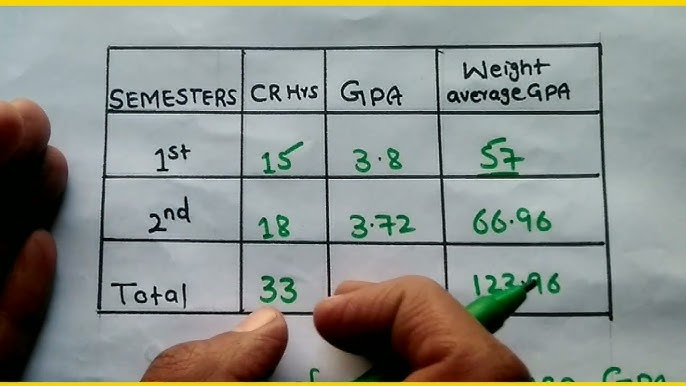
To solve this issue, the GPA to CGPA Calculator was developed as a standardized mechanism for academic conversions. More than a mathematical formula, it has evolved into a tool of empowerment, fairness, and equal opportunity. This article provides a deep dive into its history, objectives, implementation, regional and state-wise impacts, success stories, challenges, and future prospects—all while keeping the discussion practical, SEO-friendly, and human-centered.
What is CGPA and GPA?
CGPA (Cumulative Grade Point Average)
CGPA is a grading method widely adopted in India, Nepal, Bangladesh, some African nations, and Middle Eastern countries. It measures the overall academic performance of a student across subjects, usually on a scale of 10. For instance, a CGPA of 9.0 out of 10 reflects consistent excellence.
GPA (Grade Point Average)
GPA is the dominant grading method in the United States, Canada, and parts of Europe. It is usually calculated on a scale of 4.0, with 4 representing the highest achievement. Many international universities, employers, and scholarship boards require GPA instead of CGPA.
Thus, the GPA to CGPA Calculator bridges the gap between these two systems, allowing students to present their academic achievements fairly in global contexts.
Why the GPA to CGPA Calculator Matters
The tool holds importance for multiple stakeholders:
- Students – It simplifies international admissions and scholarship applications.
- Universities – It allows standardized evaluation of applicants from diverse grading systems.
- Governments – It supports policy frameworks aimed at social mobility, women empowerment, and rural development.
- Employers – It ensures fair assessment of international candidates.
By enabling transparency and comparability, the calculator empowers students to compete on equal footing worldwide.
History of GPA to CGPA Conversion
Early Manual Methods
Before digitization, students and universities relied on manual equivalency charts. These were often inconsistent, with each institution following its own formula. This created confusion and, in some cases, unfair rejection of otherwise qualified candidates.
Emergence of Online Calculators
With the rise of globalization in the 1990s and 2000s, online calculators began to appear. Initially, these tools used simple proportional methods—dividing CGPA by the maximum and multiplying by 4. However, they lacked recognition of regional nuances.
Policy-Driven Conversions
In the 2010s, governments, accreditation bodies, and educational agencies introduced structured equivalency guidelines. For instance, India’s UGC provided clear methods to convert CGPA into percentages, which could then be mapped into GPA systems. Universities in the U.S. started relying on certified evaluation agencies that built calculators aligned with global standards.
Today’s Scenario
Modern GPA to CGPA Calculator use advanced algorithms, incorporating credit hours, course weights, and grade distribution. Some even integrate AI and machine learning to adapt to different grading policies worldwide.
Objectives of the GPA to CGPA Calculator
- Standardization – Create a uniform scale for cross-border comparisons.
- Fairness – Ensure students from CGPA-based systems are not disadvantaged.
- Transparency – Provide clear conversion methods instead of arbitrary judgments.
- Accessibility – Make conversions quick, simple, and digital.
- Policy Integration – Support social welfare initiatives, scholarships, and government education programs.
How Does the GPA to CGPA Calculator Work?
The basic principle is proportional scaling. A common formula is:
GPA = (CGPA ÷ Maximum CGPA) × Maximum GPA
For example:
- If a student scores 8.5 out of 10 (CGPA), the GPA on a 4.0 scale would be:
(8.5 ÷ 10) × 4 = 3.4
Alternate Methods
Some institutions prefer a band-based approach:
- CGPA 9.0–10.0 = GPA 4.0
- CGPA 8.0–8.9 = GPA 3.7
- CGPA 7.0–7.9 = GPA 3.3
- CGPA 6.0–6.9 = GPA 3.0
Integration with Percentages
In India, many boards convert CGPA to percentage first (CGPA × 9.5), then use percentage-to-GPA charts accepted by foreign universities.
Thus, while formulas may vary, the calculator provides a quick and accurate approximation aligned with global academic standards.
Regional Impact of GPA to CGPA Conversions
Asia
Countries like India, Nepal, and Bangladesh produce millions of graduates annually, most of whom aspire to study abroad. Reliable calculators make international applications smoother and fairer.
North America
For U.S. and Canadian universities, calculators streamline admission evaluations, reducing the risk of bias against international students.
Europe
The Bologna Process emphasizes standardization under the European Credit Transfer System (ECTS). Calculators help align CGPA-based transcripts with European requirements.
Africa & Middle East
In developing nations, calculators empower students to apply for global scholarships, serving as a tool for upward social mobility.
Policy Framework Supporting GPA to CGPA Conversions
Educational and governmental policies strongly influence how conversions are accepted.
- India’s UGC Guidelines – Provides frameworks for percentage and GPA equivalency.
- U.S. Accreditation Boards – Require credential evaluation agencies that often use calculators as part of their process.
- UNESCO & OECD Initiatives – Encourage standardization of global academic systems.
- European Union Policies – Promote student mobility through consistent conversion practices.
Such frameworks ensure trustworthiness and prevent manipulation of grades.
State-Wise Benefits in India
Different states in India follow varied grading practices, making calculators particularly useful.
- Maharashtra & Gujarat – Universities often provide both CGPA and percentages, easing conversions.
- Tamil Nadu & Karnataka – Students depend on calculators since transcripts mention only CGPA.
- Delhi & Uttar Pradesh – Government-supported conversion policies help streamline admissions abroad.
- Kerala & West Bengal – Education boards encourage students to use standardized calculators for scholarships.
Thus, state-level implementation ensures that both urban and rural students benefit equally.
Women Empowerment through Academic Conversions
Women-focused scholarships often require GPA submissions. Without calculators, female students from CGPA-based systems would face unnecessary hurdles.
By offering accurate conversions, GPA to CGPA Calculator support women empowerment schemes by:
- Opening global educational doors.
- Helping women apply confidently for leadership and research programs.
- Supporting gender equality in higher education access.
This aligns with national and international goals of women’s social and economic empowerment.
Role in Rural Development and Social Welfare Initiatives
Rural students often lack exposure to international grading standards. Calculators bridge this knowledge gap.
- Government Fellowships – States like Bihar, Odisha, and Madhya Pradesh run programs to send rural students abroad.
- NGO Partnerships – Organizations working in education use calculators to prepare applications for marginalized students.
- Social Welfare Benefits – Conversions make scholarships accessible, empowering first-generation learners.
Thus, calculators indirectly contribute to rural development and inclusive growth.
Success Stories Enabled by GPA to CGPA Calculator
- Kerala Student Abroad – A girl with CGPA 9.2 converted her score to GPA 3.68, securing a women empowerment scholarship in Canada.
- Hyderabad Engineer – Used conversion tools to qualify for Erasmus scholarships, leading to a research fellowship in Germany.
- Punjab Rural Youth – Benefited from a state social welfare scheme after converting CGPA into GPA for U.S. applications.
Such stories highlight how academic conversions transform lives globally.
Challenges in GPA to CGPA Calculator
- Non-Standardized Formulas – Different universities adopt different methods.
- Over-Reliance on Free Tools – Some calculators provide inaccurate results, leading to confusion.
- Institutional Bias – Certain universities undervalue CGPA scores.
- Awareness Gaps – Rural and first-generation learners may remain unaware of these tools.
Overcoming these requires stronger regulations, official calculators on government portals, and awareness campaigns.
Comparisons with Other Academic Conversion Systems
- Percentage to GPA – Still used in older Indian universities.
- Letter Grades to GPA – Dominant in U.S. systems.
- ECTS Conversions – Standard across Europe.
Among these, GPA to CGPA Calculator have become increasingly essential for Asian students targeting global opportunities.
Digital Transformation of Converters
Modern calculators are not static formulas but dynamic tools integrated with technology.
- AI & Machine Learning – Predict equivalency based on past admissions data.
- Cloud Platforms – Universities integrate them directly into admission portals.
- Mobile Applications – Allow rural students easy access.
- Blockchain Technology – Secures conversions against fraud and tampering.
This digital evolution ensures that calculators remain credible and future-ready.
Future Prospects of GPA to CGPA Calculator
- Global Standardization – As international frameworks evolve, calculators may adopt universal formulas.
- Blockchain Integration – Authenticity and security of academic records will improve.
- Government-Certified Tools – Countries may launch national calculators recognized by universities worldwide.
- Student-Centric Innovations – Future tools may integrate extracurricular performance, holistic assessment, and personalized analytics.
FAQs on GPA to CGPA Calculator
Conclusion
The GPA to CGPA Calculator is far more than an academic tool. It is a symbol of globalization, inclusion, and empowerment. By standardizing grades, it ensures that students from CGPA-based systems are not left behind in international competitions.
From state-level benefits in India to women empowerment initiatives and rural development schemes, the calculator’s impact goes beyond classrooms. It enables dreams, supports policy frameworks, and contributes to social welfare.
As technology advances and global frameworks evolve, these calculators will only become more accurate, accessible, and influential. For students aiming to cross borders, mastering the use of a GPA to CGPA Calculator is not just a necessity—it is the first step toward building a successful future.