
KTU CGPA Calculator
APJ Abdul Kalam Technological University CGPA Calculator
| Grade | S | A | B | C | D | E | F |
|---|---|---|---|---|---|---|---|
| Points | 10 | 9 | 8 | 7 | 6 | 5 | 0 |
CGPA Calculation Results
In the modern academic landscape, precise measurement of student performance is essential for guiding instruction, supporting students, and informing institutional policy. The KTU CGPA Calculator is a practical tool designed for students of APJ Abdul Kalam Technological University (commonly referred to as KTU) to compute their cumulative grade point average (CGPA) efficiently and accurately. This article explains everything about the KTU CGPA Calculator—from its history and objectives to implementation, regional impact, comparisons with other calculators, real-world success stories, challenges, and future prospects. It also includes detailed guidance on using the calculator and a helpful FAQs section to address common concerns.
What is the KTU CGPA Calculator?
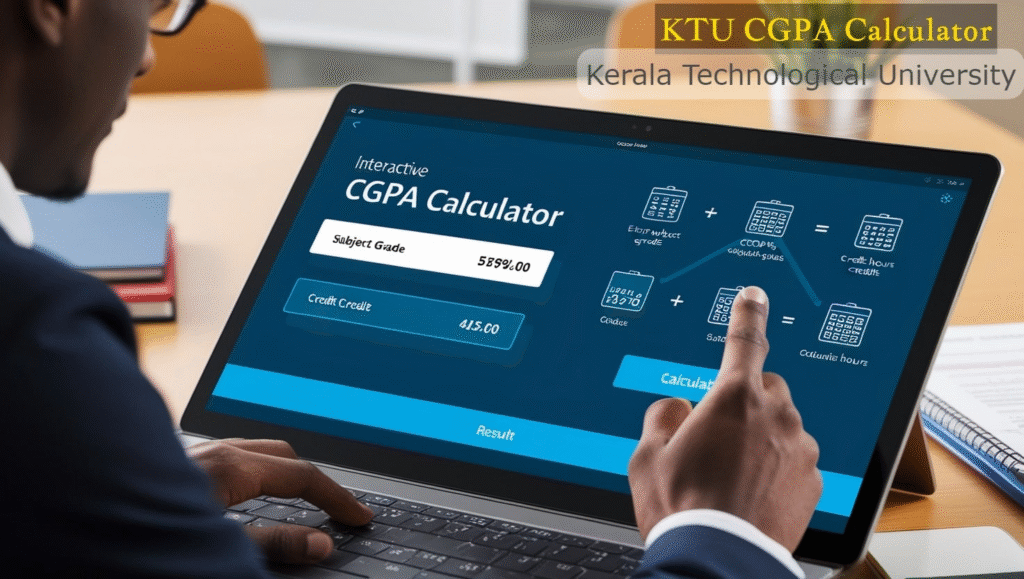
The KTU CGPA Calculator is an application — either web-based or mobile — that helps students compute their semester-wise grade point averages (SGPA) and cumulative grade point average (CGPA) based on the KTU credit and grading system. Using inputs such as course credits and achieved grades, the calculator applies the official KTU formula to yield accurate performance metrics. These tools save time, reduce calculation errors, and empower students to make informed academic decisions.
The term CGPA is central to academic evaluation systems across India and the world. CGPA represents the weighted average of grade points earned across multiple semesters, reflecting both grades and credit weight. The KTU CGPA Calculator is tailored to the KTU syllabus, credit structure, and grade-to-point mapping, ensuring that the results align with official university reporting.
History and Rationale Behind the KTU CGPA Calculator
When APJ Abdul Kalam Technological University adopted a credit-based evaluation system, students and faculty required a straightforward method to track performance. Historically, manual calculations led to inconsistencies and errors, especially when students attempted to project final outcomes or compare semester-to-semester trends. The growth of digital tools and the rising necessity for transparency in evaluation prompted the creation of the KTU CGPA Calculator.
The calculator’s core objective is simple: apply a consistent formula to grade and credit inputs. Given that KTU follows a standardized grade point mapping (for example, A+, A, B+, etc., translated into respective grade points), the KTU CGPA Calculator consolidates these mappings and automates the weighted average computation. Over time, several third-party developers, educational portals, and student groups created user-friendly calculators, while some institutions adopted official versions to support their student bodies.
Objectives of the KTU CGPA Calculator
The KTU CGPA Calculator serves multiple objectives:
- Accuracy: To minimize arithmetic errors inherent in manual calculations and provide dependable CGPA values for academic planning.
- Transparency: To help students understand how their grades and credit values influence overall performance.
- Decision Support: To enable students to simulate grade scenarios, decide on target grades, and prioritize subjects for improvement.
- Guidance for Advisors: Faculty advisors use the calculator to provide realistic advice on academic progression and remedial strategies.
- Administrative Utility: Institutions can integrate calculators into student information systems for quick audits and early-warning systems.
These goals align with broader educational policy frameworks that aim to standardize assessment practices and deliver data-driven student support.
How the KTU CGPA Calculator Works — The Formula Explained
At its core, the KTU CGPA Calculator calculates semester and cumulative averages using this step-by-step method:
- Grade-to-Point Mapping: Convert each letter grade (for example, A+, A, B, C, etc.) into a numerical grade point as per KTU guidelines.
- Multiply by Credits: For each course, multiply the grade point by the course’s credit value to obtain grade points earned for that course.
- Sum Across Courses: Add the grade points earned for all courses in a semester to get the total grade points for that semester.
- Divide by Total Credits: Divide the semester total grade points by the total credits attempted in that semester to get the Semester Grade Point Average (SGPA).
- Compute CGPA: To compute CGPA across multiple semesters, calculate the weighted average of semester grade points by summing the product of each semester’s SGPA and the credits taken that semester, then divide by the total credits across all semesters.
An example (simplified) illustrates this:
- Course 1: Grade point = 8, Credits = 3 → 24 grade points
- Course 2: Grade point = 9, Credits = 4 → 36 grade points
- Total grade points = 60; Total credits = 7 → SGPA = 60 / 7 ≈ 8.57
The KTU CGPA Calculator automates these steps and updates CGPA dynamically as students enter grades and credits.
Why Students Should Use the KTU CGPA Calculator
Academic life includes many variables — elective choices, variable credit weights, lab and project components, and sometimes grade scaling. The KTU CGPA Calculator helps in the following ways:
- Planning: Students can simulate how different future grades will affect their CGPA.
- Goal Setting: By testing scenarios (e.g., achieving A in two remaining courses), students can set realistic targets.
- Comparative Tracking: Students can track improvements or declines across semesters and intervene early.
- Scholarship Eligibility: Many scholarships and placements require minimum CGPA thresholds; the calculator helps students track eligibility.
- Time Efficiency: Instead of manual arithmetics, the calculator gives instant results.
Using a reliable KTU CGPA Calculator encourages a culture of academic accountability and informed decision-making.
Implementation and Integration in Institutional Systems
Several universities and colleges integrate CGPA calculators within their student portals or LMS (Learning Management Systems). Implementation best practices include:
- Aligning with Official Grade Mappings: Ensuring the calculator follows KTU’s official grade-to-point conversions.
- Security and Privacy: Safeguarding student data, especially when calculators store historical grades.
- Mobile Responsiveness: Allowing students to access the calculator from phones and tablets.
- Export Options: Providing downloadable reports for counseling sessions or scholarship applications.
- API Integration: Allowing the calculator to fetch grades from the institutional database, reducing manual input.
When integrated thoughtfully, the KTU CGPA Calculator becomes a core component of a comprehensive student information system, enabling advisors, registrars, and placement cells to make informed decisions.
State-Level and Regional Impact
Education tools like the KTU CGPA Calculator have implications beyond individual campuses. In Kerala, where KTU plays a central role in engineering and technological education, accessible calculators:
- Support regional equity by helping students from remote areas self-assess without needing on-campus resources.
- Align with state-level policy frameworks aiming to modernize higher education through digital tools.
- Complement state-wise benefits such as scholarships and targeted interventions by providing transparent metrics for eligibility.
- Promote workforce readiness by enabling clearer tracking of academic outcomes that recruiters and training programs monitor.
Beyond Kerala, demonstrable success in one state often serves as a model for other states aiming to digitize evaluation tools — helping scale educational reforms and improving accountability.
KTU CGPA Calculator and Social Objectives: Women Empowerment, Rural Development, and Social Welfare
While the KTU CGPA Calculator is a technical tool, its ripple effects can contribute to broad social objectives:
- Women Empowerment: By enabling transparent tracking and self-guidance, calculators help female students who may face mobility or resource constraints access the same planning tools as others, supporting retention and performance.
- Rural Development: Students from rural backgrounds can independently calculate and interpret their academic standing, reducing reliance on in-person counseling that may be harder to access.
- Social Welfare Initiatives: NGOs and state schemes that offer educational support can use CGPA data to target beneficiaries, monitor progress, and design tailored assistance.
In short, by democratizing access to reliable academic metrics, the KTU CGPA Calculator supports inclusivity and contributes to the broader social-good objectives embedded within education policy frameworks.
Comparing KTU CGPA Calculator with Other University Calculators
Comparisons help students understand strengths and weaknesses:
- KTU vs. Anna University Calculators: Anna University’s calculators often follow their specific semester credit frameworks and grade mappings; KTU’s calculator is tailored for its unique credit structure and elective patterns. A key difference is the way lab credits or project credits might be weighted.
- KTU vs. JNTU / Other Regional Calculators: Many other institutions use similar weighted-average methodologies, but differences arise in passing criteria, mandatory lab requirements, and grade boundaries. The KTU CGPA Calculator is optimized for KTU’s precise grade-point scheme.
- Third-Party Calculators vs. Official Tools: Third-party calculators can be more user-friendly but may sometimes lag in updates when university policies change. Official calculators integrated into university portals are generally robust, reflecting real-time policy changes.
When choosing a calculator, always confirm that the tool adheres to KTU’s current academic regulations.
Practical Walkthrough: Using the KTU CGPA Calculator (Step-by-Step)
Here’s a professional, explanatory walkthrough of using a typical KTU CGPA Calculator:
- Select Semester: Begin by choosing the semester for which you want to compute SGPA.
- Enter Course Details: For each course, input the course code/name, credit value, and the grade obtained.
- Verify Grade-to-Point Mapping: Some calculators include a dropdown with KTU’s grade mapping; confirm the grade points if unsure.
- Click Calculate: The tool processes the inputs and displays the SGPA for that semester.
- Add Previous Semesters: To calculate CGPA, add previous semester results or input their credits and SGPAs. The calculator computes the cumulative weighted average.
- Scenario Modelling: Use “what-if” features to test hypothetical future grades and see their impact on CGPA.
- Save or Export: If available, export the results for counseling or personal records.
This straightforward workflow ensures that students can reliably compute and interpret their academic standing without arithmetic mistakes.
Case Studies and Success Stories
Several student groups and departments reported measurable benefits after adopting calculators tailored to KTU’s framework:
- Academic Improvement through Scenario Planning: At one college, students who used a CGPA simulation feature prioritized study time for higher-credit courses, leading to a measurable uptick in average SGPAs the following semester.
- Advising Efficiency: Academic advisors saved time during counseling sessions by using the calculator to run scenarios live with students, enabling focused remediation plans.
- Placement Readiness: Placement cells at some colleges used CGPA reporting from calculators to quickly shortlist candidates for industry interviews where CGPA thresholds applied.
While specific institutional names vary, these success stories underscore that the KTU CGPA Calculator is more than a number-cruncher — it’s a practical instrument for planning and improvement.
Common Challenges and How to Overcome Them
Even with numerous advantages, calculators face challenges:
- Policy Changes and Updates: If KTU updates grading policies, third-party calculators may become obsolete until updated. The solution: prefer calculators maintained by institutions or reputed educational portals that track policy updates.
- Data Privacy: When calculators store grades in cloud-based systems, student privacy must be protected. Institutions should use secure, authenticated portals and abide by data protection norms.
- User Errors: Incorrect grade entry or credit mismatches can produce misleading CGPA values. Incorporating validation checks and a review step helps avoid mistakes.
- Overreliance on Numbers: CGPA is a quantitative metric; excessive focus on CGPA alone can obscure skill development and practical competencies. Balanced advising should integrate qualitative assessments alongside CGPA.
Addressing these challenges requires coordination between developers, institutions, and students to ensure the KTU CGPA Calculator remains accurate, secure, and educationally meaningful.
Accessibility and Inclusivity in Design
To maximize impact, calculators should be designed with inclusivity in mind:
- Multilingual Interfaces: Supporting local languages increases accessibility for regional students.
- Low-Bandwidth Versions: Lightweight pages or offline calculators help students with limited internet access.
- Assistive Features: Compatibility with screen readers and keyboard navigation benefits learners with disabilities.
- Guided Tutorials: Short walkthrough videos or help text can reduce user errors and increase confidence.
Inclusive design broadens the social impact of the KTU CGPA Calculator, ensuring that it supports diverse student populations.
The Role of the KTU CGPA Calculator in Career Planning
Beyond academics, CGPA often influences placement opportunities, higher-education applications, and scholarship eligibility. Students can harness the calculator for:
- Targeting Minimum Thresholds: Simulate how many and which courses must be improved to cross placement cutoffs.
- Graduate School Preparation: Estimate final CGPA for postgraduate applications and identify shortfalls early.
- Skill Prioritization: Allocate study time strategically to courses with higher credit impact on CGPA.
Used wisely, the KTU CGPA Calculator becomes a strategic tool in students’ broader career planning toolkit.
Future Prospects: AI, Automation, and Smarter Calculators
Looking ahead, several trends promise to improve the functionality and value of the KTU CGPA Calculator:
- Automated Grade Fetching: Integration with university MIS to auto-populate grades removes manual input errors.
- AI-Powered Recommendations: Advanced calculators could suggest personalized study plans based on historical performance and course difficulty.
- Predictive Analytics: Predictive models could identify students at risk of falling below threshold CGPAs and trigger early interventions.
- Gamified Goal Tracking: Incorporating motivational features can help students meet targets in an engaging way.
These innovations require institutional buy-in, robust data governance, and careful design to protect student privacy while enhancing educational outcomes.
Best Practices for Students Using the KTU CGPA Calculator
For maximum benefit, students should adopt the following practices:
- Validate Input Data: Always double-check course credits and grade letters before calculating.
- Keep Records: Maintain a local copy of results for counseling and scholarship applications.
- Use Scenario Planning: Run hypothetical grade scenarios to prioritize study efforts.
- Understand the Weighting: Recognize that courses with more credits have a proportionally larger impact on CGPA.
- Focus on Learning: Use CGPA as a guide, not an end in itself; emphasize conceptual mastery and practical skills.
These practices ensure the KTU CGPA Calculator helps students learn and grow rather than just chase numbers.
Comparing CGPA Systems: Global Perspectives
While the KTU CGPA Calculator is specific to a university and state, it sits within a global conversation on academic metrics:
- Percentage vs. CGPA: Some systems still use percentages. CGPA offers normalized comparisons across varying credit loads, which can be more meaningful for multi-disciplinary programs.
- Ranking and Granularity: Different institutions use different grade scales (4.0, 10.0, etc.). The calculator has to map KTU’s 10-point or other adopted scales precisely.
- Holistic Evaluation: Many global universities increasingly weigh internships, portfolios, and co-curricular achievements alongside CGPA. Tools that integrate these metrics will become more valuable.
Understanding these perspectives helps students and administrators put KTU CGPA values in context when applying to programs or jobs outside the region.
Practical Example: Interpreting Results and Action Steps
Suppose a student uses the KTU CGPA Calculator and obtains a CGPA of 7.2. What next?
- Interpretation: This is a solid average, often sufficient for many opportunities but may fall short of more competitive placements or scholarships that require higher thresholds.
- Action Steps:
- Identify high-credit courses with below-target grades.
- Use scenario modelling to determine the minimum grades needed in remaining courses to reach a target CGPA (e.g., 7.5 or 8.0).
- Consult faculty for targeted improvement strategies.
- Prioritize assignments and project work that influence grade outcomes strongly.
By translating numbers into action, the KTU CGPA Calculator functions as an academic roadmap.
Regulatory and Policy Considerations
Educational policies at the university and state level can affect how CGPA is calculated and used:
- Grading Policy Updates: Universities periodically revise grade boundaries or pass/fail rules, so calculators must stay updated.
- Scholarship Criteria: State and institutional scholarships that base eligibility on CGPA necessitate accurate and trusted calculators.
- Accreditation Metrics: Accreditors may examine grade distribution and CGPA trends as part of quality assurance reviews.
Students and administrators should keep abreast of policy changes to ensure calculator outputs remain aligned with official requirements.
Conclusion
The KTU CGPA Calculator is a vital tool for students, faculty, and institutions seeking precise, transparent, and actionable academic metrics. Far more than a convenience, it integrates with advising, planning, social objectives like women empowerment and rural education, and institutional policy frameworks. As calculators evolve — integrating automation, AI, and student-centered design — they will play an increasingly strategic role in shaping learning outcomes and career readiness.
For students navigating the complexities of multi-semester programs, the KTU CGPA Calculator is a reliable compass: it clarifies the path ahead, quantifies progress, and empowers evidence-based decisions. Used responsibly, it helps transform raw grades into meaningful academic trajectories.
Frequently Asked Questions