
Anna University CGPA Calculator
Regulation 2017 – Calculate your CGPA
Regulation 2017 Grading System: O (10), A+ (9), A (8), B+ (7), B (6), RA (0)
Subject Details
Your CGPA Results
Anna University Grade System
| Grade | Points | Marks Range (%) |
|---|---|---|
| O (Outstanding) | 10 | 91-100 |
| A+ (Excellent) | 9 | 81-90 |
| A (Very Good) | 8 | 71-80 |
| B+ (Good) | 7 | 61-70 |
| B (Average) | 6 | 50-60 |
| RA (Reappear) | 0 | Below 50 |
Anna University CGPA Calculator is rapidly becoming essential for engineering and technology students navigating the semester grading system. This comprehensive guide explains what the Anna University CGPA Calculator is, why it matters, how it works, and how it interacts with larger policy frameworks and state-level educational goals. Whether you are a first-year undergraduate trying to predict outcomes, an academic counsellor guiding cohort progression, or a policymaker examining digital tools for inclusive learning, this article offers a thorough, balanced, and practical view.
Why an Anna University CGPA Calculator matters
An Anna University CGPA Calculator is more than a simple arithmetic tool. It empowers students to plan semesters strategically, supports transparent academic advising, and helps institutions monitor performance trends. In a university system that balances continuous assessment, semester examinations, and laboratory credits, the Anna University CGPA Calculator becomes a shorthand for academic forecasting. For many students it reduces anxiety by converting elusive grade points into a tangible cumulative grade point average.
Beyond individual use, the Anna University CGPA Calculator intersects with regional education policy, digital governance, and state-level ambitions around equitable access to higher education. Digital calculators can support the policy framework of blended learning, improve accessibility for women and underrepresented groups, and inform rural development programs that prioritize technical education.
A brief history of grading and the role of calculators
The shift to semester-based evaluation and the adoption of grade-point systems in Indian technical education followed global trends in higher education assessment. Anna University, as a leading technical university in Tamil Nadu, implemented a credit-based grading system to align with quality assurance and international comparability. The Anna University CGPA Calculator emerged informally as spreadsheets and simple websites where students could convert marks to grade points and aggregate scores.
Over time, the Anna University CGPA Calculator evolved into more refined tools—mobile-friendly web pages, institutional portals, and integrated modules in student information systems. These calculators codify the Anna University grading scale, incorporate credit weights, and handle special cases such as arrears, extra credits, and practical assessments. The history of this tool is a microcosm of how universities digitize administrative processes to improve student support.
Objectives of the Anna University CGPA Calculator
The key objectives behind promoting an Anna University CGPA Calculator are:
- Transparency: Make grading calculations reproducible and understandable.
- Planning: Help students set realistic semester targets and course loads.
- Advising: Equip advisors with quick projections to guide interventions.
- Equity: Reduce information asymmetry for students from varied backgrounds.
- Data-driven policy: Provide administrators with aggregate metrics for policy evaluation.
Each objective intersects with broader goals like raising regional enrollment in STEM, supporting women empowerment schemes through accessible tools, and aligning academic outputs with state industrial development plans.
How the Anna University CGPA Calculator works (methodology explained)
At its core, the Anna University CGPA Calculator follows a consistent methodology that mirrors the university’s official grading rules:
- Convert marks to grade points: Each subject’s marks are converted into a grade point according to Anna University’s grade scale (for instance, ranges mapping to 10, 9, 8, etc.). The Anna University CGPA Calculator implements this mapping.
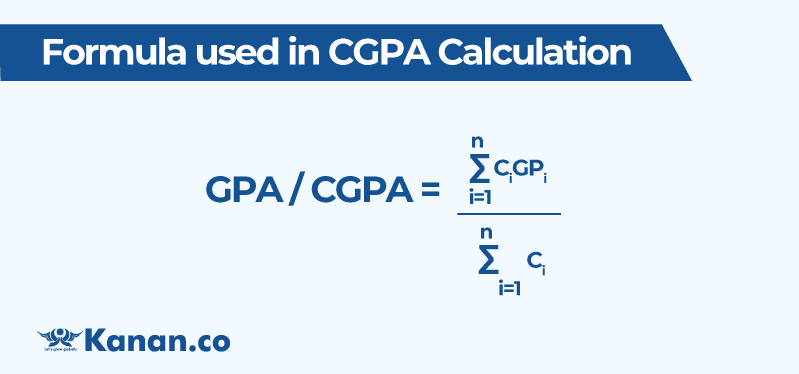
- Weight by credit value: Each course carries a credit value. The grade point for a course is multiplied by its credit value to yield weighted points.
- Aggregate weighted points: Sum the weighted points across all courses in a semester or cumulatively.
- Divide by total credits: The CGPA is the sum of weighted points divided by the total credits considered.
- Rounding rules and special cases: The Anna University CGPA Calculator accounts for rounding conventions, re-evaluations, and repeated subject rules as defined by the university.
This predictable procedure ensures the Anna University CGPA Calculator gives results that students and faculty recognize and trust. In practice, calculators also include functionality for elective choices, audit courses, and practical labs.
Understanding Anna University’s grading scale and credits
A functional Anna University CGPA Calculator depends on a clear understanding of the underlying grading scale and credit system. While specific numeric brackets can vary over time or by regulation updates, the principles remain:
- Grade point allocation: Numeric marks map to grade points (for example, 90–100 → 10, 80–89 → 9), and the Anna University CGPA Calculator strictly follows these mappings.
- Credit values: Theory courses, labs, and projects have prescribed credit weights. The Anna University CGPA Calculator multiplies grade points by these credits to compute weighted scores.
- Mandatory vs elective credits: The cumulative calculation considers only the credits that count toward the degree requirements, as captured in the Anna University CGPA Calculator.
Effective use of the Anna University CGPA Calculator requires careful data entry and familiarity with the curriculum—errors in credits or grade mapping yield misleading outcomes.
Practical walkthrough: Using an Anna University CGPA Calculator
Using the Anna University CGPA Calculator is straightforward:
- Step 1: List each subject with its marks and credit value.
- Step 2: Convert marks to grade points as per Anna University’s scale.
- Step 3: Multiply grade points by credits for each course.
- Step 4: Sum all weighted points and total credits.
- Step 5: Divide summed weighted points by the total credits to obtain CGPA.
An Anna University CGPA Calculator embedded in a portal automates these steps, and some versions provide real-time “what-if” scenarios where students can simulate different grade outcomes to plan study efforts.
The Anna University CGPA Calculator and academic planning
Academic planning benefits enormously from the Anna University CGPA Calculator. Students can:
- Identify how performance in high-credit courses disproportionately affects overall CGPA.
- Test hypothetical outcomes to prioritize study time.
- Explore the impact of re-takes and arrears on cumulative performance.
- Compare semester-to-semester trends to inform remedial action.
Academic advisors use the Anna University CGPA Calculator to recommend course loads, advise on internships versus coursework balance, and spot at-risk students early.
Implementation: From desktop spreadsheets to integrated portals
Initial implementations of the Anna University CGPA Calculator were spreadsheet templates created by seniors and faculty. As the need for reliability and accessibility grew, institutional adoption followed:
- Standalone calculators: Simple web pages and mobile apps that accept marks and credits to return CGPA.
- Integrated student information systems: University portals that pre-populate marks and credits to compute CGPA automatically.
- API-driven tools: Systems that expose calculation engines for third-party educational apps, enabling consistent adoption of the Anna University CGPA Calculator logic.
Integrated deployment ensures consistency and reduces manual errors, and it also enables longitudinal data analytics at institutional and state levels.
State-level impact and policy implications
The Anna University CGPA Calculator plays a subtle but important role in state-level educational strategies. Tamil Nadu’s focus on technical education, industry partnerships, and skilling initiatives benefits when student metrics are transparent and reliable. The Anna University CGPA Calculator contributes in several ways:
- Informed policymaking: Aggregated CGPA distributions can guide curriculum revisions or targeted support programs.
- Equitable access: Online calculators reduce the informational gap for students from rural or marginalized backgrounds, aligning with social welfare initiatives.
- Women empowerment: Accessible academic tools help female students plan careers, apply for scholarships, and meet eligibility criteria for women empowerment schemes.
- Skill mapping: CGPA data can be combined with placement and internship outcomes to inform rural development strategies that rely on local technical talent.
By linking micro-level academic measurement to macro-level policy aims, the Anna University CGPA Calculator becomes a data point in broader educational governance.
Success stories: Real outcomes from using the calculator
Several anecdotal and documented success stories illustrate the Anna University CGPA Calculator’s utility:
- A first-generation engineering student used an Anna University CGPA Calculator to recalibrate study priorities; by focusing on two high-credit core subjects, she elevated her CGPA sufficiently to qualify for a scholarship directed at women in STEM.
- A college’s academic support center employed the Anna University CGPA Calculator to identify students with borderline CGPAs and provided targeted tutoring, reducing semester backlogs by a measurable percentage.
- Placement cells used CGPA analytics to adapt interview preparation workshops, aligning students’ technical readiness with employer expectations.
These cases highlight how a seemingly simple computational tool can catalyze tangible educational and social benefits when integrated with advising and support systems.
Challenges and limitations of Anna University CGPA Calculators
Despite their benefits, Anna University CGPA Calculators face challenges:
- Data accuracy: Incorrect marks entry or outdated grade mappings lead to erroneous CGPA predictions.
- Policy changes: If Anna University revises grade boundaries or credit rules, calculators must be updated promptly.
- Overemphasis on CGPA: Students and employers may overvalue CGPA relative to skills and competencies; calculators can inadvertently encourage grade-chasing over genuine learning.
- Digital divide: Not all students have reliable internet access, which can limit the reach of online Anna University CGPA Calculator tools.
- Edge cases: Handling reattempted courses, grace marks, and special exams requires nuanced logic that some calculators lack.
Addressing these limitations requires institutional oversight, clear documentation, periodic audits, and supportive policies that contextualize CGPA within broader learning outcomes.
Comparing Anna University CGPA Calculator to other university calculators
When compared to calculators for other universities, an Anna University CGPA Calculator is similar in principle but differs in detail:
- Grading brackets: Universities maintain distinct mark-to-grade mappings; the Anna University CGPA Calculator must reflect Anna University’s specific scale.
- Credit architecture: Credit weights for labs and projects vary by curriculum; the Anna University CGPA Calculator must accommodate these structural differences.
- Policy rules: Procedures for failed subjects, grade revisions, and honors distinctions differ, so the Anna University CGPA Calculator must integrate Anna University-specific rules to be reliable.
- Integration level: Some institutions tightly integrate calculators into their SIS, while others rely on external tools. Anna University’s direction toward portal integration influences the preferred form of its CGPA Calculator.
Comparative analysis reveals that while the mathematical core is universal, trustworthy Anna University CGPA Calculators are those that faithfully implement Anna University’s regulations.
Best practices for educators and administrators
To maximize the Anna University CGPA Calculator’s utility, institutions should follow best practices:
- Standardize tools: Adopt a single, audited calculator within the university portal to avoid inconsistent results.
- Document rules: Maintain up-to-date documentation of grade mappings, credit norms, and special-case policies.
- Train staff: Equip counselors and faculty with training on how to use the Anna University CGPA Calculator for advising.
- Protect data privacy: Ensure calculators in student portals comply with data protection principles.
- Monitor impact: Use CGPA analytics to identify systemic issues and evaluate interventions designed to improve student outcomes.
By institutionalizing these practices, the Anna University CGPA Calculator becomes a reliable asset for academic quality assurance.
Designing a student-friendly Anna University CGPA Calculator
A student-friendly Anna University CGPA Calculator should emphasize usability:
- Auto-fill capabilities: Pull marks data from the official portal to avoid manual entry errors.
- What-if scenarios: Allow students to simulate different grade outcomes to plan study strategies.
- Visualizations: Show the distribution of weighted contributions to CGPA, highlighting high-impact courses.
- Guidance: Explain rounding rules, the treatment of arrears, and the significance of CGPA for placements and postgraduate admissions.
- Mobile accessibility: Ensure responsive design so students can use the Anna University CGPA Calculator on phones.
These features reduce cognitive load, increase transparency, and improve decision-making for students.
Integrating CGPA data into broader educational initiatives
When Anna University CGPA Calculator outputs are aggregated, they can inform several initiatives:
- Curriculum reform: Identify subjects with systemic low performance and revisit pedagogy or assessment patterns.
- Targeted scholarships: Use CGPA thresholds to allocate merit-based awards, particularly those aimed at women or economically disadvantaged students.
- Placement alignment: Correlate CGPA bands with placement outcomes to better prepare cohorts for industry demands.
- Community outreach: Leverage CGPA trends to design rural development training programs that build local technical capacity.
Integration requires careful governance to ensure metrics drive constructive change rather than punitive measures.
The Anna University CGPA Calculator and inclusive education
Accessibility to accurate academic calculators contributes to inclusive education by:
- Allowing first-generation and rural students to better plan for academic milestones.
- Supporting women’s educational advancement through transparent eligibility calculations for women empowerment schemes.
- Enabling social welfare programs to target beneficiaries based on objective metrics.
In this way, the Anna University CGPA Calculator aligns with state and national priorities for wider participation in higher education.
Technical considerations: accuracy, update cycles, and validation
Technically robust Anna University CGPA Calculators adhere to:
- Version control: Documenting each update when grading policies change.
- Validation tests: Running test cases, including edge scenarios such as repeated subjects and grade revisions.
- User feedback loops: Allowing students to report discrepancies which are then audited by exam sections.
- Secure hosting: Ensuring portal-based calculators are hosted on secure, resilient infrastructure.
These measures preserve trust in the Anna University CGPA Calculator and reduce operational friction.
Future prospects: AI, analytics, and personalized learning
Looking ahead, an Anna University CGPA Calculator can evolve beyond static calculations:
- Predictive analytics: Machine learning models can predict trajectory based on historical performance, course difficulty, and engagement metrics.
- Personalized interventions: Automated recommendations—for tutoring, peer mentoring, or elective choices—can be driven by CGPA patterns.
- Skill-based mapping: Linking CGPA with competency frameworks to highlight strengths and developmental areas.
- Policy dashboards: Real-time state-level dashboards could consolidate anonymized CGPA trends to inform targeted funding and capacity-building programs.
Such innovations must balance predictive value with ethical considerations and preserve student privacy.
Policy alignment: how calculators fit into regulation and accreditation
The Anna University CGPA Calculator has a role in regulatory compliance and accreditation:
- Accreditation agencies require reliable assessment systems; transparent CGPA computations support claims about academic rigor.
- Calculators can be cited in internal quality assurance documents as part of transparent student evaluation mechanisms.
- When Anna University updates regulations, synchronized calculators help ensure compliance across affiliated colleges.
Good governance ensures the Anna University CGPA Calculator supports accountability rather than undermining it.
Managing the psychological impact: CGPA as one of many indicators
While CGPA is an important metric, institutions should contextualize it:
- Emphasize project work, internships, and skill certifications alongside CGPA.
- Use the Anna University CGPA Calculator as a planning tool rather than a sole judgment of ability.
- Provide counseling to students who feel undue pressure from numerical rankings.
Such holistic approaches prevent the Anna University CGPA Calculator from becoming a source of anxiety and encourage balanced development.
Comparative case studies: lessons from other institutions
Examining other universities’ approaches to CGPA calculators provides useful lessons:
- Institutions that integrate calculators into their official portals enjoy higher accuracy and trust.
- Colleges that use calculators for proactive advising see improved student retention.
- Universities that combine CGPA analytics with career services better align students with industry needs.
Anna University and its affiliates can draw on these lessons to design calculator-driven interventions that improve outcomes and equity.
Implementation roadmap for colleges
For colleges affiliated with Anna University, a stepwise plan to adopt a trusted Anna University CGPA Calculator might include:
- Audit existing calculation methods and policies.
- Select or develop a calculator that implements Anna University’s official rules.
- Validate with historical student records.
- Integrate with the college’s student information system.
- Train faculty and counselors on use and limitations.
- Communicate clearly with students about data privacy and the calculator’s role.
Following such a roadmap ensures smooth adoption and maximum benefit from the Anna University CGPA Calculator.
Conclusion
The Anna University CGPA Calculator is a deceptively powerful instrument. On the surface it performs arithmetic; beneath it, it supports strategic academic planning, policy insights, and equitable access to higher education. When implemented transparently, maintained carefully, and situated within a supportive advising ecosystem, an Anna University CGPA Calculator helps students, educators, and policymakers make better decisions. It is not a panacea—but it is an essential tool in a modern university’s toolkit.