
JNTU CGPA Calculator
Calculate CGPA for JNTUH and JNTUK
| Grade | O | A+ | A | B+ | B | C | F |
|---|---|---|---|---|---|---|---|
| Points | 10 | 9 | 8 | 7 | 6 | 5 | 0 |
CGPA Calculation Results
The term jntuh cgpa calculator has become a staple for engineering students, academic advisors, and educational administrators connected to Jawaharlal Nehru Technological University Hyderabad (JNTUH). Understanding your cumulative grade point average (CGPA) is more than a scoreboard — it shapes internships, placements, higher-education pathways and even scholarship eligibility. This long-form guide explores the origins, mechanics, purpose, practical use, regional and institutional impact, success stories and future directions related to the jntuh cgpa calculator, offering a richly detailed, research-minded perspective designed to serve students, faculty and policy professionals.
What is a JNTUH CGPA Calculator?
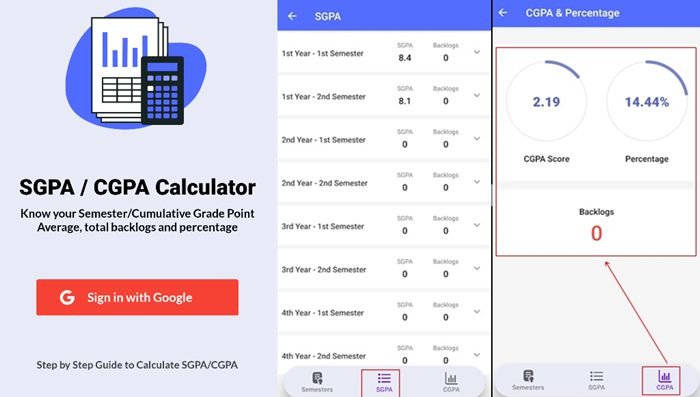
A jntuh cgpa calculator is a tool — often digital — that computes a student’s CGPA based on the grades and credit weights of individual subjects taken over semesters. JNTUH, like many Indian technical universities, uses a grade-point system where each subject contributes to the semester grade point average (SGPA) and cumulatively to the CGPA. The calculator automates the arithmetic that transforms letter or numerical marks into grade points and then into a weighted average, helping students reliably estimate academic standing without manual computation errors.
Historical background and why it matters
The emergence of digital CGPA calculators parallels the digitization of higher education management. Historically, grade computation at universities like JNTUH was a manual, paper-based process prone to human error. As financial aid, placement filters and national ranking frameworks began to hinge on quantitative indicators like CGPA, demand rose for tools that could quickly and accurately compute a student’s progress.
The jntuh cgpa calculator evolved as an accessible interface for three core stakeholders:
- Students who needed transparent, instant feedback on how performance in current or prospective courses would influence their overall grade.
- Faculty and advisors who required quick checks while counseling students about course loads and retake strategies.
- Employers and placement cells that used CGPA thresholds to screen candidates efficiently.
The historical shift towards digital tools also dovetailed with broader education policy reforms in India, where data accuracy and analytics began to inform state-level decisions affecting curriculum reforms, scholarship distributions and resource allocation.
Objectives and intended outcomes
The main objectives of a jntuh cgpa calculator are straightforward but consequential:
- Transparency: Provide students a clear, understandable computation of their cumulative performance.
- Accessibility: Make CGPA calculations easy to perform across devices, without the need for technical know-how.
- Planning: Enable what-if scenarios (for example, “If I score X in upcoming subjects, what will my CGPA be?”) to support course selection and academic strategy.
- Standardization: Ensure that grade point calculations follow the university’s rules uniformly, reducing inconsistent manual calculations.
- Decision support: Assist administrators and placement officers in setting thresholds and recommending interventions.
When these objectives are met, the ripple effects include improved student outcomes, more efficient placement operations, and better-informed policy choices at departmental and state levels.
How the JNTUH grading system works (and how calculators implement it)
Understanding formulae is essential to appreciating the role of a jntuh cgpa calculator. Though specific grading scales may be updated by JNTUH from time to time, the general approach is:
- Each course has associated credit hours.
- Performance in the course is translated into a grade (letter or numerical), which maps to a grade point (for example, 10 for ‘O’, 9 for ‘A+’, etc.).
- For a semester, the SGPA is computed as the weighted average of grade points, weighted by credits:
SGPA = (Σ (grade point × credits)) / (Σ credits) - CGPA across semesters is the weighted average of SGPAs, again proportionate to credits or by cumulative formula.
A jntuh cgpa calculator typically implements these rules: it takes subject-wise credits and either percentage marks or grade letters as input, maps marks to grade points per the university’s conversion table, computes SGPAs for semesters, and then aggregates them to display CGPA. More advanced calculators permit hypothetical inputs to assess future scenarios and can handle complexities such as credit re-attempts, additional courses, and elective weightings.
Practical implementation: student-facing apps and web tools
Most student-facing jntuh cgpa calculator implementations are web apps or mobile applications. Key features that make such tools effective include:
- Input flexibility: accepting both numeric marks and grade letters.
- Credit-aware computation: allowing users to specify credits per course.
- Semester-by-semester view: showing SGPA and cumulative CGPA evolution.
- What-if analysis: enabling projection of outcome based on future scores.
- Export and share: producing screenshots or PDFs for counseling sessions or placement applications.
Universities and student developer communities often collaborate to ensure that calculators mirror official regulations. Official integrations sometimes link the calculator to student information systems, enabling auto-population of course credits and previously recorded grades.
Accuracy, validation, and academic integrity
A jntuh cgpa calculator is only as reliable as its formula and the quality of input data. Universities should validate calculators periodically against official grade records to ensure consistency. From an academic integrity perspective, calculators are advisory — they assist decisions but do not replace official transcripts issued by the university. It’s critical that students and advisors treat the output as indicative and verify with university records in cases where official requirements depend on exact CGPA values.
State-level and regional impact
Although the JNTUH CGPA Calculator and JNTUK CGPA Calculator are primarily educational tools, their effects radiate into state-level education ecosystems:
- Placement landscape: States with strong technical universities see enhanced employer engagement when CGPA metrics are readily available and consistent, improving regional employability.
- Scholarships and social welfare initiatives: Transparent CGPA measurements help policy officers identify eligible students for state-funded scholarships and targeted support, particularly for marginalized groups and for initiatives tied to merit criteria.
- Women empowerment and inclusive access: When academics use reliable tools to monitor performance, they can better design interventions to support women students in STEM, aligning with larger women empowerment schemes.
- Rural development and upward mobility: Accurate academic tracking supports targeted programs to uplift students from rural backgrounds, integrating performance metrics into state policy frameworks that aim to reduce educational disparities.
In short, the jntuh cgpa calculator and JNTUK CGPA Calculator becomes a pointing device for policymakers who wish to translate academic outcomes into social and economic development initiatives.
Success stories: students, colleges, and systems
Several illustrative narratives highlight the positive role of the jntuh cgpa calculator and JNTUK CGPA Calculator in student success:
- A student struggling to plan elective choices used a calculator to model how replacing a low-credit elective with a higher-credit technical course would impact overall CGPA. The projection informed a strategic retake that raised the student’s CGPA above placement cutoffs.
- A college’s placement cell integrated a CGPA calculator into its dashboard, allowing recruiters to filter candidate pools accurately and quickly. This transparency increased the number of campus interviews and improved matching efficiency.
- A scholarship committee in a neighboring state adopted standardized CGPA computation protocols inspired by JNTUH practices, ensuring equitable award distribution for rural students who previously faced documentation inconsistencies.
These examples underscore the calculator’s role in supporting individual agency and institutional efficiency.
Challenges and criticisms
No tool is without limitations. Some common challenges associated with jntuh cgpa calculator usage include:
- Policy drift: If the university updates grading norms or introduces new courses with special credit rules, calculators can become outdated quickly unless maintained.
- Edge cases: Handling of failed courses, repeated attempts, grade replacement policies, and audit courses requires careful attention in the calculator logic.
- Overemphasis on numbers: Reliance on CGPA as a singular metric can obscure soft skills, project outcomes, and domain-specific competencies that placements and admissions should also value.
- Data privacy: When integrated with student information systems, calculators must respect data security and privacy regulations.
- Equity concerns: CGPA-based filtering can disproportionately affect students from disadvantaged backgrounds who may have lacked access to consistent academic support.
Addressing these challenges requires policy foresight, technical maintenance, and complementary assessment mechanisms that value holistic student profiles.
Comparisons: JNTUH approach vs other universities
Comparing the jntuh cgpa calculator—or rather the practices it embodies—with other institutions worldwide yields instructive contrasts:
- Many international universities use GPA scales (e.g., 4.0 scale), but the mathematical principle is the same: a weighted average. The difference lies in mapping grades to points and credit systems.
- Some universities weight core courses more heavily; others allow pass/fail options that exclude course grades from CGPA. A robust jntuh cgpa calculator and JNTUK CGPA Calculator must be adaptable to such variants if used across institutions.
- Several universities publish official calculators; others leave it to third-party developers. Official, centrally maintained calculators tend to be more authoritative and less error-prone.
The takeaway: while calculators perform similar computations across systems, their utility depends on alignment with each institution’s academic regulations and their capacity to adapt to policy changes.
Integrations with learning management and placement systems
For colleges and departments, integrating a jntuh cgpa calculator into learning management systems (LMS) or placement platforms can streamline administrative workflows. Integration benefits include:
- Auto-fetching credits and grades, reducing manual data entry.
- Dashboards for advisors to monitor at-risk students by tracking CGPA trends.
- Enhanced placement matching using accurate, current CGPA metrics.
- Cohort-level analytics enabling policy-level decisions about curriculum adjustments or extra academic support.
However, integration must respect student consent and comply with institutional data governance policies to prevent misuse.
Best practices for students using a JNTUH CGPA calculator
Students should use a jntuh cgpa calculator strategically, not ceremonially. Recommended practices include:
- Verify the grade-point mapping used by the calculator against official JNTUH regulations.
- Use what-if scenarios to plan retakes and elective choices.
- Maintain a personal log of grades and calculated CGPA, and reconcile with university records each semester.
- Consult counselors when the calculator reveals at-risk status — early intervention matters.
- Include other metrics (projects, internships, certifications) alongside CGPA in resumes and placement preparations.
By combining calculator insights with counseling and holistic skill development, students can meaningfully influence both their CGPA and overall employability.
Implementation considerations for colleges and developers
If you’re a college admin or developer building a jntuh cgpa calculator, consider:
- Maintainability: Provide an admin interface to update grade-to-point mappings and credit rules as university policies evolve.
- Edge case logic: Accurately implement rules for failed courses, repeats, lateral entries, and grade replacements.
- Usability: Design a mobile-friendly UI, include clear instructions, and display both SGPA and CGPA with easy-to-read breakdowns.
- Security: Ensure data is protected, particularly if the tool links to student records.
- Localization: Include regional language support for wider accessibility within the state and neighboring regions.
A well-designed tool is not only technically accurate but also usable and secure.
Policy framework and the calculus of academic reforms
The jntuh cgpa calculator sits within a larger policy framework of higher education governance. Administrators and policymakers should consider:
- How CGPA is used in scholarship and affirmative action schemes, ensuring it does not inadvertently exclude deserving candidates.
- Whether the CGPA calculation methodology should change to reflect project-based evaluation and continuous assessment models.
- How to incorporate CGPA analytics into state-level educational planning for resource allocation or targeted support.
- Ensuring transparency of computation rules so that students can predict outcomes and contest discrepancies.
Embedding calculators within a comprehensive policy framework transforms them from mere utilities into tools of academic governance and social equity.
State-wide benefits and regional development
Regions that invest in reliable academic measurement tools like the jntuh cgpa calculator enjoy several advantages:
- Improved employability metrics: Transparent CGPA reporting makes the area’s talent pool more marketable.
- Better targeting of development programs: Data-driven scholarship or mentorship initiatives can focus on students who will benefit most.
- Strengthened higher education ecosystems: Colleges that adopt standardized tools streamline cross-campus collaborations and intercollegiate benchmarking.
- Enhanced reputation: Consistency in grading and transparent computation can augment the institution’s image within the state and nationally.
These benefits align with broader rural development and social welfare initiatives that depend on reliable education data.
Linking CGPA to broader social initiatives: women empowerment and inclusion
Academic metrics intersect with social goals. By pairing a jntuh cgpa calculator with targeted programs, institutions can:
- Identify trends where women students might be underrepresented in high CGPA brackets and design mentoring programs.
- Monitor the effects of affirmative action or state-sponsored scholarships on CGPA distributions.
- Use analytics to support interventions aimed at reducing dropout rates among underprivileged students.
Tools that quantify academic performance can thus become instruments of inclusion when paired with deliberate policy actions.
Technical architecture: what makes a resilient calculator
A resilient jntuh cgpa calculator should be built with modular architecture:
- A core engine that implements calculation rules and handles edge cases.
- A data layer that stores grade mappings and credit structures, ideally with versioning to track policy changes.
- A presentation layer that focuses on UX, enabling clear display of SGPA, CGPA and what-if scenarios.
- APIs for secure integration with LMS and placement platforms.
- Logging and audit trails so calculations can be traced, ensuring accountability.
This architecture enables scalability, maintainability and trustworthiness—critical properties when a calculator influences academic and career decisions.
Ethical considerations and data governance
As institutions connect calculators to student data, they must adopt robust governance:
- Transparent consent mechanisms for any data sharing.
- Clear policies about who can access computed CGPAs and for what purposes.
- Retention and deletion policies that align with legal requirements.
- Measures to prevent misuse of CGPA data in discriminatory or unfair recruitment practices.
Ethical deployment ensures that the jntuh cgpa calculator empowers rather than disadvantages students.
Future prospects: smarter calculators and analytics
Looking forward, the jntuh cgpa calculator can evolve into a richer analytics platform:
- Integration with learning analytics to correlate CGPA trends with attendance, assignment performance and engagement metrics.
- Predictive models to identify students at risk of falling below thresholds and recommend interventions.
- Personalized dashboards that combine CGPA with employability readiness—soft skill scores, project portfolios and certifications.
- Blockchain-based transcript verification for tamper-proof certification combined with CGPA summaries for recruiters.
Such innovations expand the calculator’s role from arithmetic tool to a strategic academic support system.
Recommendations for stakeholders
For students:
- Use a jntuh cgpa calculator regularly but complement it with mentorship and non-academic skill building.
For faculty and administrators:
- Keep calculators aligned with official policy, validate outputs and employ them for proactive student support.
For developers:
- Prioritize accuracy, security and maintainability. Build flexible rule engines to accommodate policy shifts.
For policymakers:
- View CGPA analytics as inputs to broader social programs—use them to enhance scholarship targeting, women empowerment initiatives, and rural development strategies.
Conclusion
The jntuh cgpa calculator is more than a convenience — it’s a pivotal interface between student effort, institutional administration and societal outcomes. From helping an individual student plan a retake to informing state-level scholarship distributions, accurate CGPA computation empowers decision-making up and down the education ladder. As universities and policymakers continue to emphasize data-driven governance, maintaining transparent, secure and flexible CGPA tools will be key to unlocking academic potential and translating educational achievement into social mobility.