
SRM CGPA Calculator
SRM Institute of Science and Technology CGPA Calculator
Course Details
Your CGPA Results
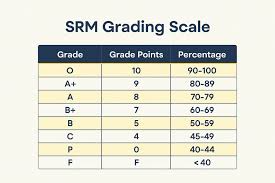
SRM Grading System
| Grade | Grade Point | Percentage Range |
|---|---|---|
| O (Outstanding) | 10 | 90-100% |
| A+ (Excellent) | 9 | 80-89% |
| A (Very Good) | 8 | 70-79% |
| B+ (Good) | 7 | 60-69% |
| B (Average) | 6 | 50-59% |
| C (Pass) | 5 | 40-49% |
| F (Fail) | 0 | Below 40% |
The term SRM CGPA Calculator has become a staple for students, advisors and academic administrators who need a practical, accurate and transparent way to estimate academic standing. Whether you are an undergraduate planning your final semester, a counselor helping students choose courses, or a policymaker studying the regional impact of grading systems, understanding how the SRM CGPA Calculator works — and how to use it strategically — is essential. This long-form guide explains the origins, mechanics, implementation, state-level implications, comparative landscape, success stories and future prospects surrounding the SRM CGPA Calculator, while also offering actionable advice for students aiming to improve their cumulative grade point average.
What is the SRM CGPA Calculator?
The SRM CGPA Calculator is a tool — often available online or integrated into university portals — that converts semester grade information and credit load into a cumulative grade point average (CGPA). It mirrors the SRM University grading policy and academic structure, applying the weighted average of grade points across courses to provide a single, comparable metric of academic performance. For many students the SRM CGPA Calculator is more than a convenience: it is a planning instrument, a projection device and a transparency mechanism that helps translate letter grades and credit schemes into outcomes that employers, graduate programs and regulatory bodies understand.
Why the SRM CGPA Calculator matters
An accurate SRM CGPA Calculator matters for multiple reasons. First, CGPA is widely used as a threshold for scholarships, internships and placement shortlisting; having an accurate estimate empowers students to plan their semester load with purpose. Second, the calculator fosters equity and transparency by making grading computations interpretable rather than opaque. Third, at an institutional and policy level, consistent use of the SRM CGPA Calculator supports comparisons across departments and campuses and informs evaluations of educational interventions, regional outreach programs and schemes aimed at improving access and outcomes for underrepresented groups.
A brief history: how SRM’s grading evolved and the rise of the calculator
SRM’s academic assessment system has followed a broader international trend toward credit-based grading and cumulative indices. Historically, many Indian universities used percentage systems, sometimes with varying denominators, which complicated cross-institutional comparisons. SRM, like many modern universities, adopted a credit-weighted grade point model to align with global standards. As curricula grew in complexity with elective choices, laboratory credits and multidisciplinary course loads, manual calculations became unwieldy. The SRM CGPA Calculator emerged as a simple digital response to this complexity: standardizing calculations, speeding up planning, and giving stakeholders real-time insight into expected academic outcomes.
Objectives of the SRM CGPA Calculator
The primary objectives of the SRM CGPA Calculator are:
- To provide students with an accurate, easy-to-use projection of cumulative academic performance.
- To support academic advising and course selection with forward-looking scenarios.
- To enable administrative transparency and reporting that supports scholarships, placements and accreditation.
- To facilitate policy analysis by creating a normalized metric that can be used to evaluate state-level programs, regional outreach, and equity initiatives.
- To help institutions benchmark student performance against national and international norms.
How the SRM CGPA Calculator works: the formula and mechanics
At its core, the SRM CGPA Calculator applies a weighted average formula where each course contributes to the cumulative grade point average in proportion to its credit weight. The basic computation follows these steps in plain terms: convert letter grades or semester grade points into numeric grade points, multiply each course’s grade point by its credit value to get weighted points, sum these weighted points across all semesters, and divide by the sum of credits attempted. The result is the CGPA — a single number that reflects overall performance.
More formally, the typical formula used by an SRM CGPA Calculator looks like this:
CGPA = (Σ (GradePoint_i × Credit_i)) / (Σ Credit_i)
where GradePoint_i represents the grade point for the i-th course and Credit_i is the credit value for that course. Different versions of the SRM CGPA Calculator may account for nuances such as pass/fail courses, audit credits, grade forgiveness policies and rounding rules. Understanding these local policy choices is essential to interpret the results correctly.
Using the SRM CGPA Calculator: practical steps and tips
Using an SRM CGPA Calculator is straightforward, but doing so strategically requires attention. Start by collecting the correct inputs: official grade points for each course, accurate credit values and clarity on which courses count toward CGPA (for example, remedial or audited courses might be excluded). Enter each semester’s courses and credits into the calculator. When exploring hypothetical scenarios — such as “what if I score X in next semester’s Y-credit course?” — use the calculator’s projection functionality to test several outcomes.
A few tactical tips: always double-check your grade-to-grade-point mapping, be mindful of rounding rules that could affect eligibility thresholds (e.g., rounding up to meet minimums for scholarships), and use scenario planning to determine the minimum grades you need to reach target CGPAs for placements or postgraduate admissions. For students involved in multi-campus programs or transfer credits, feed the correct equivalence data into the calculator so projections remain realistic.
Implementation: how SRM and related institutions integrate the CGPA calculator
Many SRM campuses integrate the SRM CGPA Calculator into student portals, learning management systems and mobile apps to ensure seamless access. Implementations vary from simple web calculators — where students manually enter grades and credits — to automated integrations that pull grades from the university’s registrar database. Automation reduces errors and increases adoption, while manual tools remain useful for hypothetical planning or for alumni who want to re-calculate legacy records.
From an administrative perspective, integrating the SRM CGPA Calculator into official processes supports admission committees, placement cells and scholarship boards. When calculators are standardized across the institution, reporting becomes more consistent and audits easier. Security and privacy must be prioritized when calculators access student records; role-based permissions, audit logs and encryption are common features in mature implementations.
State-level and regional impact: educational policy and access
Though seemingly a technical tool, the SRM CGPA Calculator has implications for broader educational policy and regional development. Policymakers use CGPA distributions to assess the effectiveness of state-sponsored tuition subsidies, merit-based scholarships and reserved seat programs. For instance, when a state invests in uplift programs for rural colleges, changes in CGPA distributions (measured using tools like the SRM CGPA Calculator) can be an empirical indicator of impact.
Regional impact also emerges where universities cooperate with state governments on upskilling initiatives or women’s education schemes. A transparent CGPA calculation framework ensures that policy evaluations are based on comparable academic metrics. When integrated with state-level data dashboards, the SRM CGPA Calculator output can help identify gaps in learning outcomes, inform targeted interventions in teacher training, and measure the efficacy of financial aid programs meant to improve access and retention.
Success stories: how the SRM CGPA Calculator has helped students and programs
Across campuses, the SRM CGPA Calculator has generated numerous practical success stories. Students preparing for final semester projects have used it to model how elective choices affect overall standing, enabling them to prioritize coursework strategically and schedule remedial efforts where they matter most. Placement cells have used calculator-driven projections to shortlist candidates more fairly across disciplines. Academic advisors have leveraged the tool to create individualized academic recovery plans for students returning from academic probation, quantifying the pathways to regain good standing.
At the policy level, an SRM-affiliated center in one region used aggregated CGPA projections to demonstrate the positive effect of targeted tutoring programs for first-year students. The data — generated in part by standard CGPA calculations — helped secure continued funding and expand the program to neighboring districts. Such stories highlight how a simple calculation tool, when implemented transparently, can produce measurable positive outcomes.
Challenges and limitations of the SRM CGPA Calculator
Like any instrument, the SRM CGPA Calculator has limits. One challenge is inconsistent data entry: inaccurate credit values or wrong grade mappings will produce misleading CGPAs. Another challenge is policy complexity; exceptions such as grade replacement, semester withdrawal, and special repeats can complicate automated calculations. Some departments also employ different grading scales for certain professional or lab courses, requiring custom configurations.
Beyond technical issues, there are policy and equity concerns. CGPA compresses diverse learning outcomes into a single index, which may mask important skills or contextual challenges faced by students from disadvantaged backgrounds. Over-reliance on CGPA for high-stakes decisions can therefore reinforce systemic inequities unless paired with holistic evaluation criteria. Finally, while the SRM CGPA Calculator standardizes numeric calculations, it cannot replace qualitative assessments such as internships, portfolios and interviews.
Comparison: SRM CGPA Calculator vs other GPA calculators
Comparing the SRM CGPA Calculator to other calculators — including those used by different Indian universities and international institutions — highlights both commonalities and distinct features. Most calculators employ the same weighted-average formula, but differences arise in grade scales (4.0 vs 10.0), treatment of failed courses, rounding and equivalence rules for transfer credits. Some calculators are designed for percentage-to-GPA conversions, while others support back-calculation from CGPA to expected percentages for resume optimization.
The SRM-specific calculator typically aligns with SRM’s grade scale and credit structures, which may differ from a central university or an international partner. For students applying abroad or transferring credits, awareness of conversion norms — and using calculators that can output converted equivalents — becomes vital. In comparative studies of calculators, the SRM tool often scores well on user-friendliness and institutional alignment, but may require manual conversion functions for cross-border comparisons.
Academic planning with the SRM CGPA Calculator: scenarios and strategies
The SRM CGPA Calculator is particularly valuable for forward-looking academic planning. Students can run scenario analyses such as “If I take this 3-credit elective and earn a B+, what will my CGPA be?” or “If I repeat a 4-credit failed course and obtain an A, how does that affect my cumulative score?” These scenarios inform decisions about course load, elective selection and even internship timing.
Effective strategies include prioritizing high-credit courses in which marginal grade improvements have a larger CGPA impact; balancing demanding courses across semesters to avoid burnout; and using the calculator to identify the minimum grade needed to reach scholarship thresholds. Advisors can use the tool to create recovery paths that specify realistic grade targets by semester, combining academic support interventions with precise arithmetic so students can track progress.
Equity and inclusion: how the SRM CGPA Calculator supports broader educational goals
When used thoughtfully, the SRM CGPA Calculator contributes to equity and inclusion. Transparent calculation rules demystify grading for first-generation college students and those from rural backgrounds who may not be familiar with credit-weighted systems. Embedding the calculator within orientation programs or student support centers ensures all students understand how grades translate into opportunities. In conjunction with state-level scholarship programs and women empowerment initiatives, CGPA projections can clarify eligibility and motivate targeted academic support for underrepresented groups.
However, as mentioned, CGPA must not become the sole criterion for opportunity. Complementary metrics and qualitative evaluations should remain part of scholarship and placement decisions to ensure fairness for students with non-traditional strengths or constraints.
Technical features and desirable enhancements for the SRM CGPA Calculator
Modern implementations of the SRM CGPA Calculator can go beyond basic arithmetic. Desirable features include automatic grade import from the registrar, scenario simulation, incorporation of grade replacement policies, and exportable reports for placement cells and scholarship committees. Mobile-friendly interfaces increase accessibility. Advanced features might include predictive analytics that estimate the probability of reaching a target CGPA based on historical performance, or visualization dashboards that show CGPA trajectory over time.
From a security perspective, calculators that access student records should implement secure authentication, consent controls and logging. Ensuring accessibility for students with disabilities — such as screen-reader compatibility — broadens utility and aligns with inclusive education norms.
Policy framework and the SRM CGPA Calculator
At the institutional level, the SRM CGPA Calculator must align with academic regulations, faculty senate decisions and accreditation requirements. Clear policy documentation about how CGPA is computed, how special cases are handled and what rounding rules apply builds trust. For policymakers and quality assurance bodies, a standardized calculator offers reproducible metrics that support audits and accreditation reviews. When educational ministries or state governments evaluate institutional performance, normalized CGPA data is often part of a broader indicator set used for funding and recognition.
State-wise impacts and administrative use cases
When aggregated, outputs from many individual SRM CGPA Calculator runs provide administrators with insight into state-wise academic performance. For example, a university that monitors the CGPA distributions of students from different districts can identify educational disparities rooted in school preparation. Such analyses can guide outreach programs, targeted bridge courses or partnerships with state education departments. Data-driven interventions — backed by transparent CGPA calculations — form the basis for evidence-led policy aiming at reducing regional disparities and improving learning outcomes across the socioeconomic spectrum.
Real-world examples: program evaluation and scholarship targeting
Consider a scenario where a state education board partners with SRM to improve STEM engagement among female students in rural districts. By tracking CGPA trends pre- and post-intervention using the SRM CGPA Calculator, program managers can quantify improvements in academic attainment and justify continued support. Similarly, placement cells evaluating the success of a summer bootcamp might use CGPA shifts to report outcomes to funders. These real-world uses illustrate how a standardized calculation tool becomes part of a larger ecosystem of program evaluation and social investment.
How employers and graduate programs interpret SRM CGPA Calculator outputs
Employers and graduate admissions committees typically use CGPA as a screening metric, but its interpretation varies. A strong CGPA calculated via the SRM CGPA Calculator signals consistent performance and discipline, which are attractive to recruiters. When sharing CGPA with external stakeholders, students should accompany the numeric index with contextual information: grade scale, major-specific grading trends, and any exceptional circumstances. For graduate applications, converting CGPA to commonly understood equivalents (e.g., percentage or 4.0 scale) may be necessary, and many SRM calculators include such conversion features.
Best practices for students using the SRM CGPA Calculator
Students should adopt several best practices to derive maximum benefit from the SRM CGPA Calculator. Maintain an up-to-date record of grades and credit loads, learn the official grade mapping used by the university, and use the calculator to run both conservative and optimistic scenarios. Document the assumptions behind each projection — for example, whether a repeated course is included — and consult academic advisors before making major decisions based on calculated projections. Finally, use the calculator as one input among many: combine numeric planning with mentoring, well-being strategies and career guidance.
Addressing skepticism: does CGPA capture student ability?
Skeptics rightly point out that the SRM CGPA Calculator reduces multifaceted learning to a single number. This simplification can overlook creativity, leadership and applied skills that matter in workplaces and society. The response is twofold: first, acknowledge the limitation and advocate for holistic evaluations; and second, use CGPA transparently as part of a broader portfolio that includes projects, internships and letters of recommendation. Institutions and employers that rely solely on CGPA risk missing talent that thrives in real-world settings rather than standardized assessments.
Future prospects: what’s next for the SRM CGPA Calculator?
Looking forward, the SRM CGPA Calculator is poised to evolve with technology and policy trends. Integrations with predictive analytics, machine learning models that forecast degree completion risk, and enhanced visualization tools will make the calculator an even more powerful planning device. Interoperability standards will enable smoother cross-institutional comparisons and credit transfers. Policy shifts toward competency-based education could require new calculation paradigms, whereby CGPA sits alongside competency badges and micro-credentials. Nonetheless, the core value of a transparent, standardized calculator will remain central to academic planning and policy evaluation.
Ethical and governance considerations
As the SRM CGPA Calculator becomes embedded in decision-making, ethical governance becomes crucial. Institutions should publish clear algorithmic governance documents that describe how calculators are designed, what data sources they use and how privacy is maintained. Students should have recourse in case of discrepancies between official transcripts and calculator outputs. Finally, developers must avoid opaque “black box” features that could obscure how a final number is reached; transparency builds trust.
Practical case study: planning a final-year semester using the SRM CGPA Calculator
Imagine a final-year student with a current CGPA of 7.12 who must reach 7.5 to qualify for a competitive fellowship. Using the SRM CGPA Calculator, the student inputs existing credits and projected grades for two remaining semesters, exploring scenarios such as prioritizing a 4-credit elective to maximize CGPA impact. The calculator shows that securing an A in a high-credit technical course combined with a B+ in a lower-credit elective meets the target. Armed with this plan, the student focuses tutoring, lab time and project work on the high-leverage course. The result is an efficient allocation of effort and a higher likelihood of hitting the fellowship threshold.
Communicating CGPA: transcripts, resumes and conversion
When reporting a CGPA calculated via the SRM CGPA Calculator, clarity matters. On resumes, include the CGPA alongside the scale used (for example, CGPA: 8.23/10.0) and, where relevant, a converted percentage or 4.0-equivalent for international audiences. Transcripts should remain the authoritative record; calculator outputs are planning tools and should not be used as substitutes for official documents. Clear communication prevents misunderstandings in recruitment and admissions processes.
Recommendations for administrators and developers
For administrators and developers building or maintaining an SRM CGPA Calculator, prioritize accuracy, usability and transparency. Implement rigorous testing against official registrar calculations, provide robust help documentation, and include features for special-case handling such as grade replacements and transferred credits. Offer audit logs and explainability features that clarify how the final CGPA is derived. Finally, incorporate student feedback into continuous improvement cycles to ensure the tool meets real-world planning needs.
Conclusion
The SRM CGPA Calculator is more than a mathematical convenience; it is a strategic instrument that empowers students, supports administrators, informs policymakers and aids employers in interpreting academic performance. Its strength lies in standardization, transparency and the ability to model academic outcomes. When implemented and used thoughtfully — combined with equitable policies and holistic reviews — the SRM CGPA Calculator can help individuals and institutions make data-informed decisions that enhance learning and social mobility.