How to Calculate CGPA from SGPA – Easy Guide for Students
Understanding how to calculate CGPA from SGPA is one of the most important practical skills for students, academic advisors, and administrators. Whether you are a first-year undergraduate trying to estimate your cumulative standing, a tutor explaining grading systems, or a policymaker evaluating educational outcomes, this guide explains the formulas, gives worked examples, explores policy and regional implications, and compares alternative grading schemes. The aim is to give you a single, authoritative resource that answers the question “how to calculate CGPA from SGPA” with clarity, accuracy, and context.
What CGPA and SGPA mean — the basics
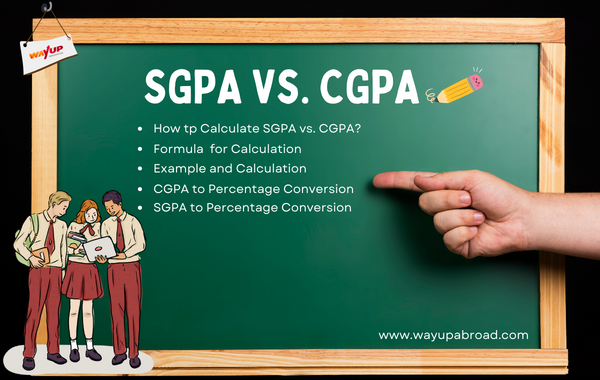
At the heart of the question how to calculate CGPA from SGPA is two acronyms:
- SGPA — Semester Grade Point Average. This reflects performance in one semester and is usually calculated as the weighted average of grade points obtained in courses taken during that semester, weighted by course credits.
- CGPA — Cumulative Grade Point Average. This shows overall performance across multiple semesters and is typically the weighted average of SGPAs or of the grade points across all courses taken so far.
Universities and boards may define grade points, credit allocations, and conversion rules slightly differently, but the fundamental arithmetic behind how to calculate CGPA from SGPA remains consistent: use weighted averages that respect credit values.
The fundamental formula: how to calculate CGPA from SGPA
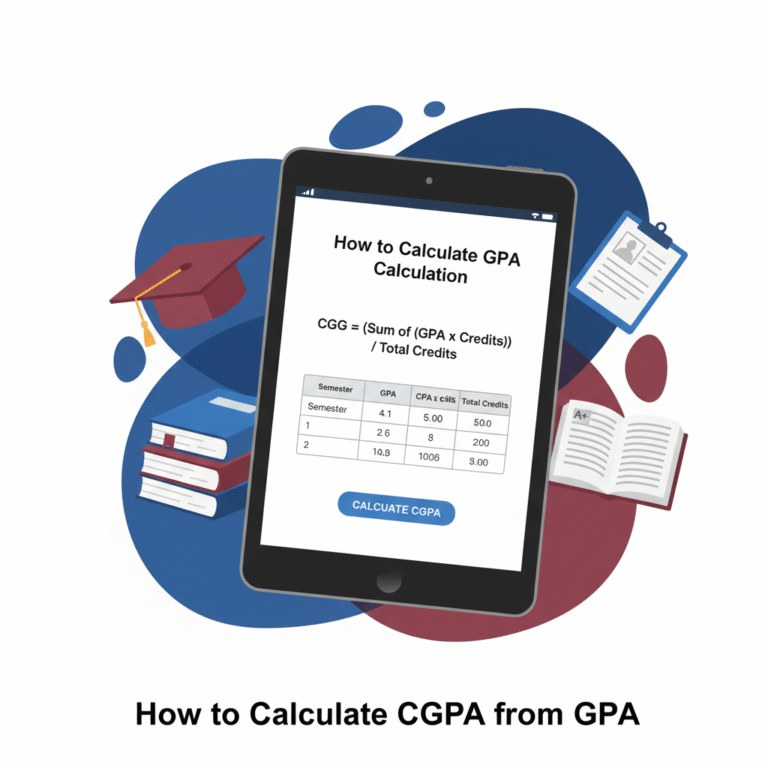
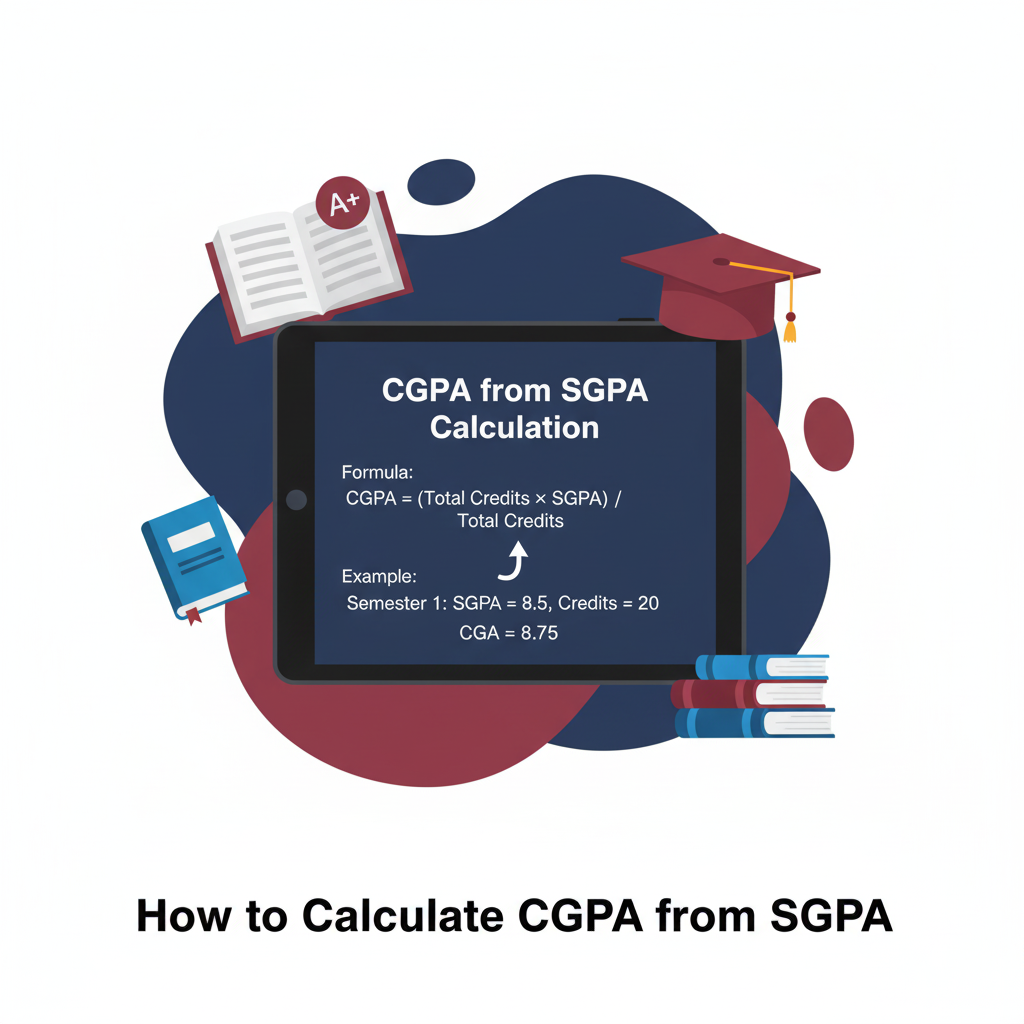
When all semester credit loads differ, the correct approach to how to calculate CGPA from SGPA is to compute a weighted average of the semester grade points. The mathematically rigorous formula is:
CGPA = (Σ (SGPA_i × Credits_i)) / (Σ Credits_i)
Where:
- SGPA_i is the semester grade point average for semester i.
- Credits_i is the total credit value of semester i.
- Σ denotes summation across all semesters considered.
If every semester carries equal credit load, how to calculate CGPA from SGPA simplifies to the arithmetic mean of all SGPAs:
CGPA = (SGPA₁ + SGPA₂ + … + SGPAₙ) / n (only when credits per semester are identical)
This formula ensures that performance in a heavier-credit semester contributes proportionally more to the overall CGPA — a fair and widely accepted principle.
Step-by-step example (digit-by-digit) — essential for accuracy
To illustrate how to calculate CGPA from SGPA precisely, we show a step-by-step numerical example with full arithmetic transparency.
Suppose a student has completed six semesters with the following semester credits and SGPAs:
- Semester 1: Credits = 24, SGPA = 8.2
- Semester 2: Credits = 22, SGPA = 7.5
- Semester 3: Credits = 24, SGPA = 8.6
- Semester 4: Credits = 24, SGPA = 7.9
- Semester 5: Credits = 22, SGPA = 8.0
- Semester 6: Credits = 24, SGPA = 8.4
Step 1 — multiply each semester’s SGPA by its credits (compute each product digit-by-digit):
- Semester 1 product: 8.2 × 24
Multiply 8.2 by 24:
- 8.2 × 20 = 164.0
- 8.2 × 4 = 32.8
- Sum = 164.0 + 32.8 = 196.8
- Semester 2 product: 7.5 × 22
- 7.5 × 20 = 150.0
- 7.5 × 2 = 15.0
- Sum = 150.0 + 15.0 = 165.0
- Semester 3 product: 8.6 × 24
- 8.6 × 20 = 172.0
- 8.6 × 4 = 34.4
- Sum = 172.0 + 34.4 = 206.4
- Semester 4 product: 7.9 × 24
- 7.9 × 20 = 158.0
- 7.9 × 4 = 31.6
- Sum = 158.0 + 31.6 = 189.6
- Semester 5 product: 8.0 × 22
- 8.0 × 20 = 160.0
- 8.0 × 2 = 16.0
- Sum = 160.0 + 16.0 = 176.0
- Semester 6 product: 8.4 × 24
- 8.4 × 20 = 168.0
- 8.4 × 4 = 33.6
- Sum = 168.0 + 33.6 = 201.6
Step 2 — sum all semester products:
196.8 + 165.0 + 206.4 + 189.6 + 176.0 + 201.6 = 1135.4
Step 3 — compute total credits:
24 + 22 + 24 + 24 + 22 + 24 = 140
Step 4 — apply the formula for how to calculate CGPA from SGPA:
CGPA = Total weighted grade points / Total credits
CGPA = 1135.4 ÷ 140
Compute the division digit-by-digit:
- 140 × 8 = 1120
- Remainder = 1135.4 − 1120 = 15.4
- 15.4 ÷ 140 = 0.11 (since 140 × 0.11 = 15.4)
Therefore, CGPA = 8 + 0.11 = 8.11
Rounded to two decimal places, the student’s CGPA = 8.11.
This step-by-step method demonstrates exactly how to calculate CGPA from SGPA, with no hidden shortcuts and full numeric transparency.
Quick rules and common variants when calculating CGPA
- Different credit loads — use the weighted average formula described above. This is the standard for most universities.
- Equal-credit semesters — compute the simple average of SGPAs. This is valid only when credits are identical.
- Per-course grade-point aggregation — some institutions prefer to compute CGPA by aggregating course-level grade points across all semesters and dividing by total credits; mathematically this is identical to the weighted SGPA approach when SGPAs are themselves weighted averages.
- Rounding rules — institutions vary. Some round CGPA to two decimal places, some report three decimals, and others apply truncation. Always check the university’s academic regulations.
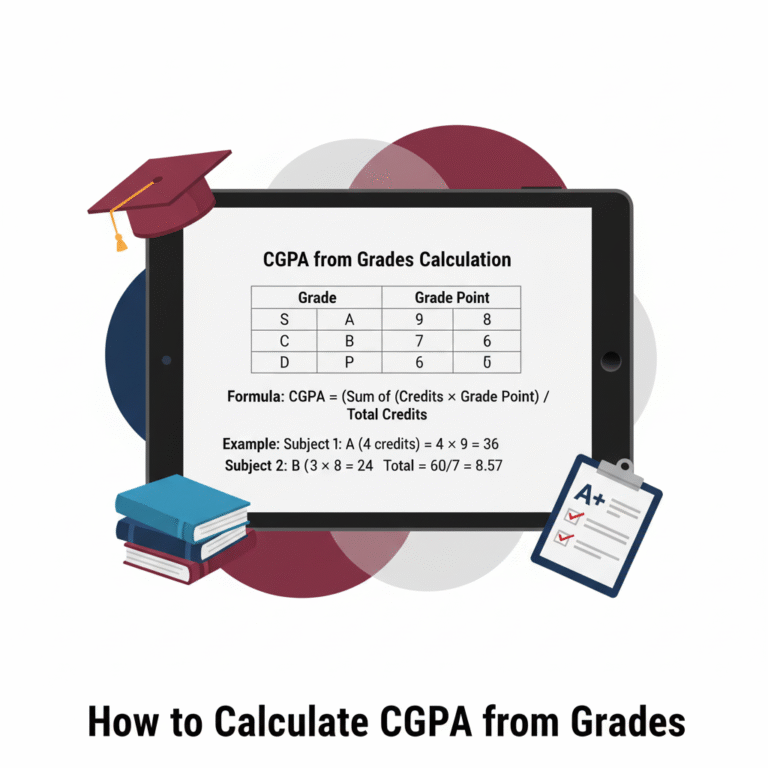
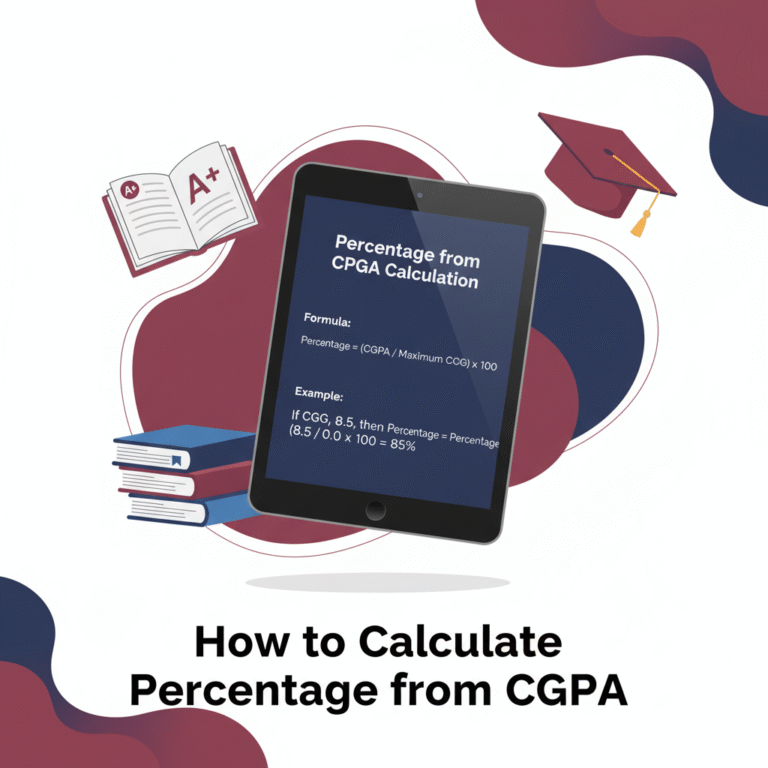
- Conversion to percentage — conversions vary by region and board. For example, some boards use CGPA × 9.5 to convert to percentage (a common CBSE conversion in Indian school boards), while certain universities may use CGPA × 10 or bespoke formulas. Therefore, when asking how to calculate CGPA from SGPA and then convert to percentage, confirm institutional policy.
Why the weighted average matters: fairness and academic integrity
Understanding how to calculate CGPA from SGPA is more than number-crunching. The weighted average respects the heavy-lift courses and longer semesters. Consider these reasons why weighted calculation is the accepted practice:
- Credits reflect workload and learning hours: A 4-credit lab plus 3-credit theory course should not have equal influence as a 1-credit elective. Weighted averaging ensures proportionality.
- Accuracy across curricula: Professional programs often front-load heavy credit semesters (project-intensive terms); an unweighted mean would misrepresent cumulative performance.
- Policy alignment: Universities’ regulations and accreditation bodies often mandate weighted cumulative calculations to ensure comparability and fairness.
Practical tips for students: compute your CGPA steadily and correctly
- Gather official transcripts or academic records that list semester credit totals and SGPAs.
- Use a spreadsheet to implement the formula: column A = credits, column B = SGPA, column C = product (A×B). Sum column C and divide by sum of column A.
- Keep intermediate steps to ensure traceability — institutions may audit calculations.
- When transferring credit or repeating courses, check institutional rules for whether repeated course grades replace old grades or both count (this affects how to calculate CGPA from SGPA in practice).
- Confirm rounding policy: if CGPA is used for scholarships or competitive selection, an extra decimal place might matter.
Implementation: how universities and boards operationalize CGPA calculation
Implementing how to calculate CGPA from SGPA at scale requires consistent academic rules, automated systems, and audit processes:
- Academic regulations define grade point scales (e.g., 10-point, 4-point), credit definitions, rounding rules, and special cases (withdrawals, pass/fail).
- Student information systems (SIS) automate the weighted calculations, generate transcripts, and apply conversions (e.g., to percentage).
- Quality assurance involves cross-checks, appeals processes, and policy documentation so students understand how final CGPA figures are derived.
Institutions that standardize their rules make it easier for students to predict outcomes and for employers to interpret transcripts.
Regional and state-level considerations — how the calculation impacts policy and outcomes
Although how to calculate CGPA from SGPA is a technical question, it has broader implications when applied across educational systems and states:
- Inter-state mobility of students: States with standardized grading scales facilitate credit transfers and comparability; inconsistent rules can create barriers when students move between boards or universities.
- Policy frameworks and alignment: Education departments that issue guidelines on grade-point scales help ensure fair implementation across public universities. Governments sometimes incentivize states to adopt uniform credit and grading policies to improve national comparability.
- Access and equity: Accurate, transparent CGPA calculation supports scholarship allocation, affirmative action programs, and women empowerment schemes — where grades can open doors to targeted benefits. For instance, a state scholarship for female students may use CGPA thresholds; clear rules on how to calculate CGPA from SGPA are necessary to ensure fair eligibility.
- Rural development and social welfare initiatives: When state education programs support rural students through scholarships, remedial education, or digital learning, CGPA becomes a measurable outcome for program evaluation. Correct computation of CGPA from SGPA means better tracking of impact.
In short, the mechanics of how to calculate CGPA from SGPA feed into larger systems that shape educational policy, targeted programs, and regional development objectives.
Success stories: where sound CGPA calculation helped students and institutions
Concrete examples illustrate the value of transparent CGPA computation:
- A university that moved from an inconsistent, manual SGPA-to-CGPA approach to a standardized, automated system reduced transcript disputes by 80%, improving student satisfaction and employer trust.
- Scholarship committees that published the precise way they computed CGPA from SGPA found applicants’ documents cleaner and appeals rarer, speeding up awards and reducing administrative workload.
- Women’s education initiatives using CGPA thresholds for targeted grants developed clear portals showing applicants exactly how their CGPA was calculated, increasing transparency and enrollment among eligible students.
These success stories underscore that accuracy and clarity in how to calculate CGPA from SGPA are not just administrative niceties — they have concrete effects on access, morale, and institutional credibility.
Challenges and common pitfalls
Although the formula for how to calculate CGPA from SGPA is simple, practical challenges and misunderstandings arise:
- Different grading scales: Some institutions use a 4.0 scale while others use a 10-point scale. Converting SGPAs from one scale to another without official guidance can produce misleading CGPAs. Always use institution-provided conversions.
- Repeats and grade replacements: Universities vary on whether repeated courses replace earlier grades or both count. Such rules strongly affect cumulative CGPA and must be clarified in policy.
- Transferred credits and cross-institution equivalence: When students transfer between institutions or study abroad, credits may be accepted conditionally. Proper accounting of credits is essential to compute a fair CGPA.
- Rounding inconsistencies: Some registrars round each semester’s SGPA before aggregating; others aggregate raw products then round at the end. Consistency is key to avoid disputes.
- Misapplication of unweighted averages: Using an unweighted average when credits differ can give a skewed impression of academic performance.
Addressing these pitfalls requires clear policy documents, staff training, and transparent transcripts that show the underlying credit and grade-point arithmetic.
Comparing CGPA systems with other grading schemes
When discussing how to calculate CGPA from SGPA, it helps to place CGPA within the wider landscape of assessment systems.
- Percentage system: Common in many regions for school-level assessments. Percentages are intuitive but less comparable across institutions with different marking schemes. CGPA abstracts across course weight and grade scales and may be more stable.
- Letter-grade systems (A, B, C): Often mapped to grade points (e.g., A=4.0). Letter grades are categorical and less granular than CGPA but easier for quick evaluation. Converting from letter grades to CGPA depends on the mapping table.
- Pass/fail systems: These do not produce numeric grade points and thus cannot yield CGPA. Where institutions switch to pass/fail (e.g., during crises), cumulative numeric comparisons are impossible.
- Norm-referenced (bell-curve) grading: In competitive programs, grades may be curved. Even with curved SGPAs, how to calculate CGPA from SGPA remains the same mathematically, but interpretation differs because distributions, not absolute achievement, determine grades.
Each system has trade-offs; institutions often publish conversion guidelines to translate local scales into CGPA equivalents for admissions, scholarships, and job screenings.
Institutional policy recommendations: best practices for CGPA computation
For universities, registrars, and education departments responsible for defining how to calculate CGPA from SGPA, the following best practices improve fairness and transparency:
- Publish a clear formula (show the weighted average formula and examples).
- Define credit policies clearly (what counts as a credit, how labs and projects are credited).
- State rounding and grade replacement rules explicitly.
- Automate calculations via SIS with audit logs to minimize human error.
- Provide a clear transcript layout that shows semester credits, SGPAs, weighted products, and total credits — so anyone can independently verify the CGPA calculation.
- Offer official conversion tables for translating CGPA to percentage or other scales, with documentation about the methodology.
- Include guidance about transfer credits and study-abroad credits, and how these affect cumulative calculations.
These steps not only answer “how to calculate CGPA from SGPA” but also make the process defensible and transparent.
How to report CGPA on resumes and applications
Students often need to use CGPA computed from SGPAs when applying for jobs, scholarships, or postgraduate programs. Here’s how to present it professionally:
- Always use the official CGPA figure as computed by your registrar. If asked, be ready to explain exactly how to calculate CGPA from SGPA in brief terms: “CGPA is a credit-weighted average of semester grade points.”
- If your institution uses a 10-point scale and an application expects a percentage, check institutional conversion rules before converting yourself. Incorrect self-conversions can raise doubts.
- When space permits, include the grading scale used (e.g., “CGPA: 8.11/10; grading scale 0–10; CGPA calculated as credit-weighted mean of semester grade points”).
This clarity helps recruiters and selection committees interpret your results accurately.
Future prospects: digital records, micro-credentials, and the evolving role of CGPA
As education systems evolve, so do the ways we think about cumulative measures like CGPA and the mechanics of how to calculate CGPA from SGPA:
- Digital transcripts and blockchain-based credentials will make CGPA calculations transparent, auditable, and portable across borders.
- Micro-credentials and competency-based assessments may complement or, in some contexts, replace CGPA-centric evaluation, especially for lifelong learning and professional development.
- Data-driven policy: Aggregated CGPA data can help policymakers identify performance gaps, target investments in women empowerment schemes, and assess the success of rural development educational initiatives.
Even so, the core arithmetic of how to calculate CGPA from SGPA — weighted averages based on credit values — will remain a foundational skill for the foreseeable future.
Frequently asked questions (FAQs)
Final thoughts
Understanding how to calculate CGPA from SGPA equips students, advisors, and policymakers with a reliable method to quantify academic progress. The underlying mathematics is straightforward — a weighted average that respects credit loads — but the implications reach far beyond arithmetic. Transparent calculation practices support equitable scholarship allocation, help design targeted state-level educational interventions, and feed into program evaluation for rural development, women empowerment schemes, and social welfare initiatives that depend on credible academic metrics.
If you are a student: collect your credit and SGPA data, use the weighted formula, and verify rounding rules. If you are an administrator: publish the formula, automate calculation, and ensure transcripts are transparent. For policymakers: ensure consistent grading policies across institutions to maintain comparability and fairness.